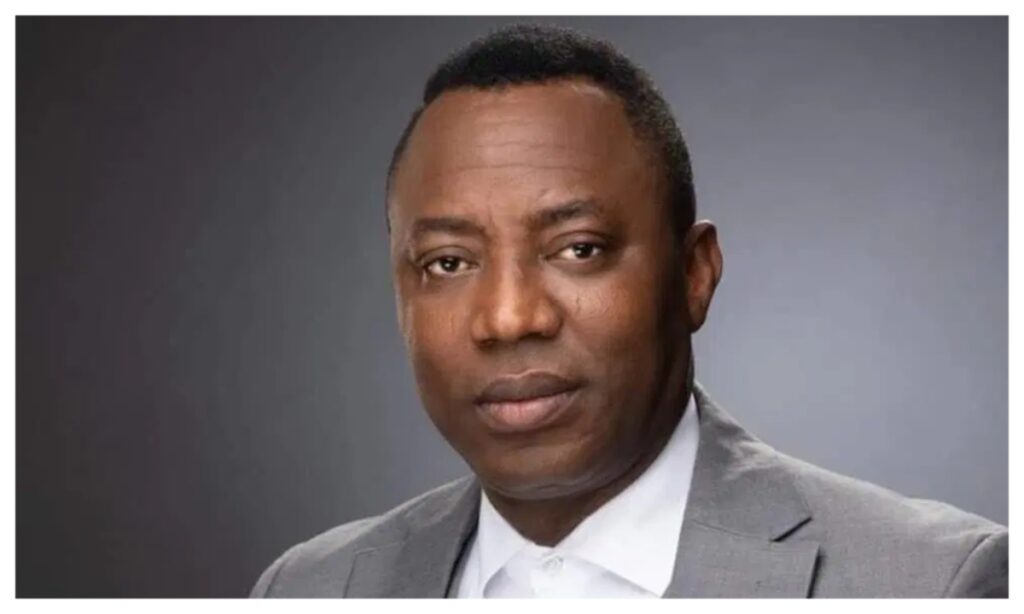
Presidential candidate Omoyele Sowore of the African Action Congress (AAC) has raised fresh doubts about the academic credentials of President Bola Tinubu, the ruling party’s flag‑bearer. Speaking to journalists on Monday, Sowore alleged that the university certificate Tinubu submitted to the Independent National Electoral Commission (INEC) ahead of the 2027 Elections is not the same document he presented in 1999 when he first contested and won the governorship of Lagos State. He warned Nigerians that they should not vote for candidates whose academic records cannot be verified. “The APC candidate only presented a paper from Chicago State University, which was different from the paper he presented in 1999,” Sowore said.
INEC released the credentials and other details of all presidential candidates on Friday, a routine step in the electoral process. The commission’s publication has already sparked widespread outrage over Tinubu’s missing primary and secondary school certificates, which many observers say raise serious questions about his educational qualifications. The absence of these foundational documents has become a focal point of the broader debate over the integrity of the candidates’ claims.
The AAC’s criticism comes at a time when the electoral commission’s vetting procedures are under intense scrutiny. INEC is tasked with verifying that each candidate meets the constitutional requirements, including the possession of a minimum level of education. While the commission has confirmed that Tinubu’s university certificate is authentic, the discrepancy highlighted by Sowore suggests that the documents presented at different stages of his political career may not be identical. The matter has prompted calls from opposition parties and civil society groups for a more thorough review of the candidate’s academic background.
The controversy is part of a larger pattern of challenges to the credentials of high‑profile politicians in Nigeria. In recent years, several candidates have faced accusations of falsifying or misrepresenting their educational qualifications, leading to legal disputes and public protests. The current episode adds to the growing demand for transparency and accountability in the electoral process.
For voters, the debate underscores the importance of scrutinizing the qualifications of those who seek public office. The AAC’s allegations, if substantiated, could influence public perception of Tinubu’s suitability for the presidency. Whether INEC will undertake additional investigations remains to be seen, but the commission’s role in ensuring that all candidates meet the required standards is clear.
As the 2027 presidential election approaches, the scrutiny of candidate credentials is likely to intensify. The AAC’s challenge to Tinubu’s academic record is a reminder that the legitimacy of a candidate’s qualifications is a critical factor in a democratic society. The outcome of this dispute will be closely watched by political observers, voters, and the international community, all of whom are keen to see whether the electoral process in Nigeria upholds the principles of transparency and integrity.