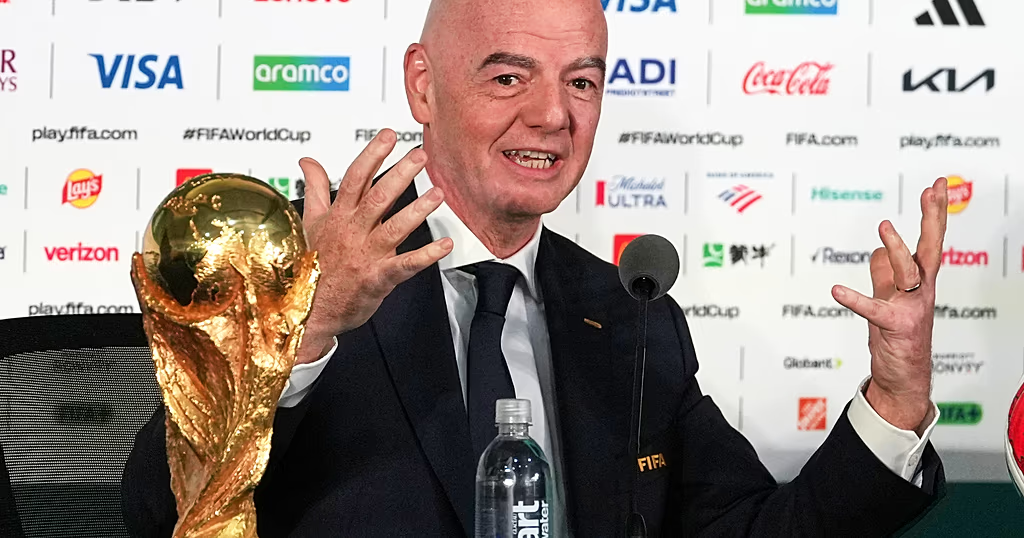
FIFA has reaffirmed its support for President Gianni Infantino following a crisis meeting in Morocco on Wednesday, as the organization attempts to contain fallout from a failed proposal to privatise a portion of World Cup commercial rights. The governing body also issued an apology to member associations for mistakes made during the process, promising a review to be presented at the next FIFA Council meeting.
The controversy erupted over a plan to sell a 20 per cent stake in a new commercial rights entity, a move that provoked immediate and fierce backlash from across the football world. The proposal was withdrawn last Friday, but not before drawing sharp criticism for its lack of transparency and for the involvement of a company with family links to US President Donald Trump.
European football’s governing body, UEFA, described the plan as a “shabby, backroom, opaque deal” hatched by Infantino. The criticism triggered a broader crisis of confidence. Two senior FIFA officials joined calls for the president to resign, while both UEFA and the Confederation of North, Central America and Caribbean Association Football (CONCACAF) stated they had lost confidence in his leadership. CONCACAF went further, demanding “a comprehensive reckoning with this presidency” and citing “poor governance and leadership.”
The association representing major European leagues — including the Premier League, La Liga and Serie A — called on Wednesday for fundamental governance reform at FIFA. In a joint statement, they insisted that all relevant stakeholders must have a formal role in decisions shaping the game’s future. The group also rejected any further expansion of the World Cup, notably the possibility of a 64-team format, and warned it would oppose the creation or expansion of FIFA competitions until reforms are enacted.
Adding to the pressure, Canadian Prime Minister Mark Carney, whose country is set to co-host the 2026 World Cup alongside the United States and Mexico, declared he no longer had confidence in Infantino’s ability to lead FIFA. The president had been widely expected to stand unopposed for a fourth and final term at Elections scheduled for next March.
Despite the mounting opposition, Infantino retains significant support, particularly among smaller member associations that rely heavily on FIFA development funding. This division underscores the deepening governance tensions within world football as the organization navigates its most serious leadership challenge in years. The promised review and the upcoming FIFA Council meeting will be critical tests of whether the current structure can absorb the demands for accountability and transparency now echoing across continents.