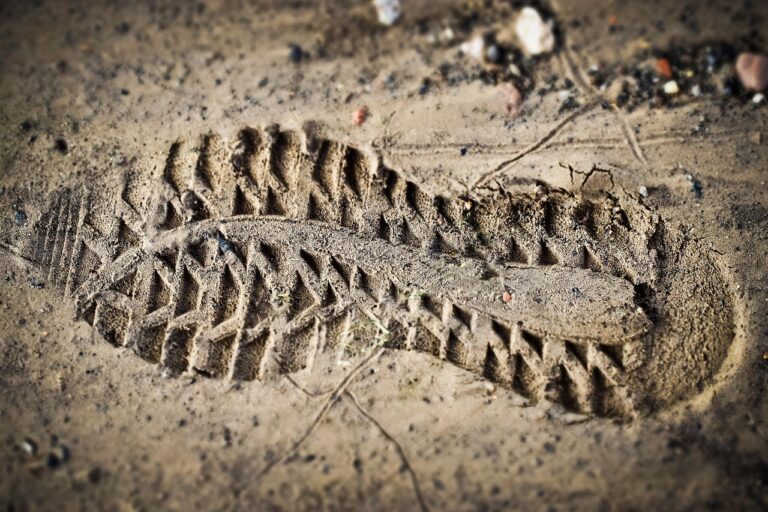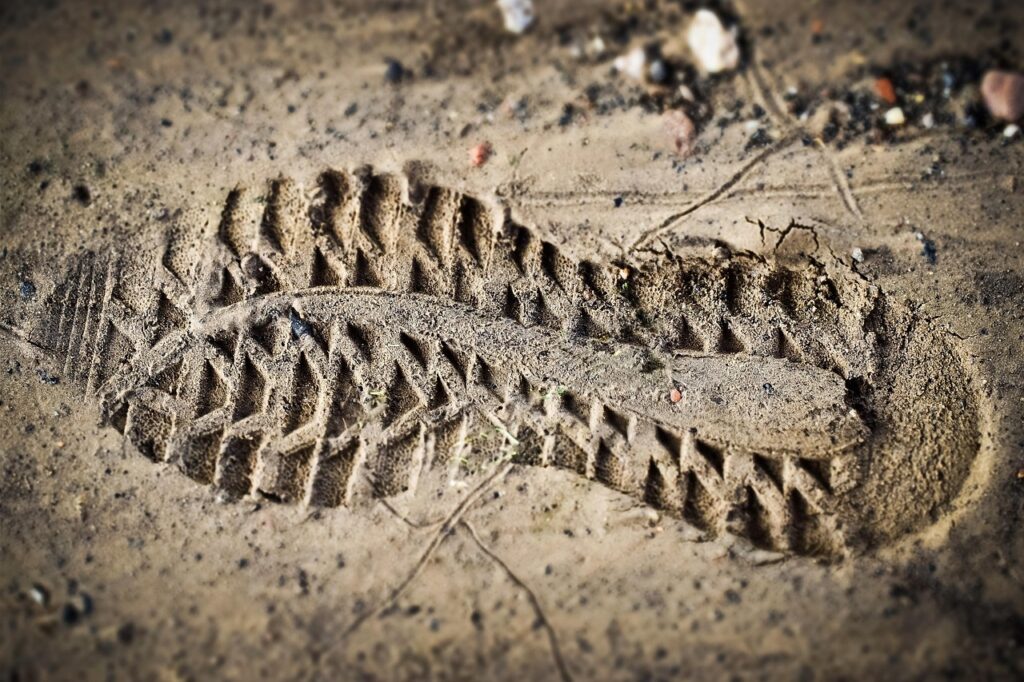
There is a moment in every investigation when the noise fades and the smallest detail takes center stage. A single strand of hair, a faint smudge on a windowsill, a speck of dirt lodged in a shoe tread. To the untrained eye, these are nothing. To a forensic scientist, they are a confession written in a language only science can translate.
Forensic science is not a single discipline but a meeting point of many. Biology, chemistry, physics, and mathematics converge here, each lending its own lens to examine the fragments left behind after a crime. The goal is simple to state but painstaking to achieve: reconstruct what happened, who was there, and what they did. It is less about dramatic courtroom revelations and more about the slow, methodical work of turning chaos into clarity.
At the core of this work is evidence. It can be vast, like a pool of digital data pulled from a seized phone, or microscopic, like a fiber invisible to the naked eye. It can be biological, physical, or testimonial. But the principle remains the same: every action leaves a trace, and every trace tells a story. The forensic scientist’s job is to listen carefully, using tools that range from the humble microscope to complex statistical models that weigh probabilities with mathematical precision.
Trace evidence is where the field often earns its reputation. These are the tiny transfers that happen without anyone noticing, the skin cells left on a doorknob, the pollen grains clinging to a jacket, the paint chips scattered across a roadside. By analyzing these fragments, investigators can place a suspect at a scene or unravel the sequence of events in a way that eyewitness accounts never could. A clump of clay on a boot, for instance, might tie a person to a riverbank miles from their home, a detail they never thought to explain.
No advancement has reshaped this discipline more than DNA analysis. The ability to extract genetic material from a drop of blood, amplify it through polymerase chain reaction, and compare it against profiles in national databases has cracked cold cases that sat unsolved for decades. It has exonerated the innocent and implicated the guilty with a level of certainty that other forms of evidence rarely achieve. The process is delicate, requiring meticulous handling to avoid contamination, but when executed correctly, it is nothing short of revolutionary.
Yet DNA is not the only arrow in the forensic quiver. Fingerprint comparison remains a cornerstone of identification, relying on the unique ridges and whorls that no two people share. Firearms analysis, meanwhile, examines the striations left on bullets and shell casings, linking a weapon to a shooting with near-surgical specificity. These techniques, refined over decades, continue to provide answers in cases where other avenues have gone cold.
Technology is pushing the boundaries further. Investigators now use 3D printing to recreate crime scenes in physical form, allowing juries and analysts to walk through a space as it was at the moment of the crime. Artificial intelligence and machine learning are sifting through vast datasets, flagging patterns and connections that might escape even the most experienced human eye. The potential is immense, but it comes with a caveat: new tools must be rigorously tested and validated before they can be trusted in a courtroom.
The field is not without its flaws. Evidence can be contaminated by careless handling. Interpretations can be skewed by bias or inexperience. The consequences of such errors are severe, affecting lives and freedoms. That is why the scientific community insists on continuous training and peer review, reminding practitioners that the pursuit of truth demands humility and precision.
Still, when applied with care, forensic science is one of the most powerful instruments of justice we possess. It does not rely on memory or emotion, but on the immutable laws of nature. It offers a way to see what happened when no one was watching, to bring resolution to families who have waited years for answers, and to ensure that those who commit crimes are held accountable.
Looking ahead, the field is poised for even greater breakthroughs. Research into new analytical methods, faster DNA sequencing, and more sophisticated algorithms promises to make forensic analysis quicker and more accurate. But the human element remains irreplaceable. The judgment of a trained analyst, the ethical standards of a laboratory, the commitment to objectivity, these are what elevate a collection of techniques into a true science.
Forensic science is often described as a window into the past. But it is more than that. It is a mirror held up to our own nature, reflecting both our capacity for wrongdoing and our relentless drive to uncover the truth. In the end, it reminds us that no act is truly invisible. Somewhere, in a fiber, a fingerprint, or a fragment of DNA, the answer is waiting. And it is the forensic scientist, patient and precise, who will find it.