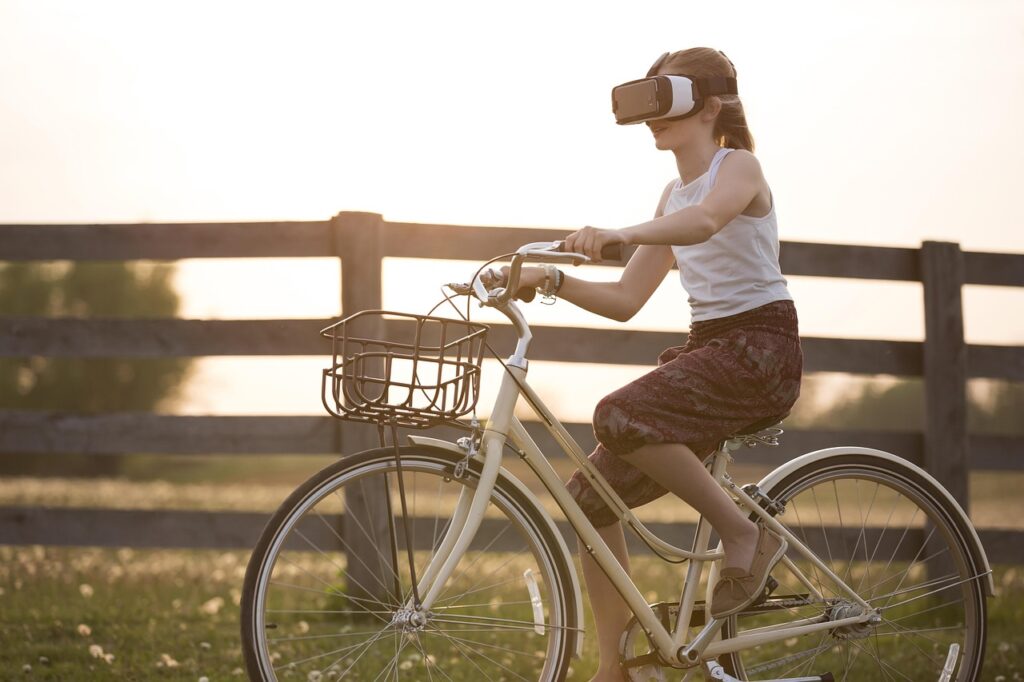
There is a moment, just after you put on a virtual reality headset, when your mind quietly surrenders. It stops questioning the pixels and starts accepting the illusion. That moment is not an accident. It is the result of decades of engineering, psychology, and a little bit of mathematical trickery.
Virtual reality has come a long way from the clunky, wire-laden prototypes of the 1960s. Today, it is a polished tool reshaping how we learn, heal, and entertain ourselves. But beneath the sleek hardware lies a complex battle against the human brain’s own skepticism.
The core of VR is not the display or the controllers. It is the manipulation of presence, that strange sensation of being somewhere you are not. To achieve this, developers rely on a delicate mix of sensory cues. Stereoscopy feeds each eye a slightly different image, creating depth. Motion parallax shifts the scene as you move, convincing your body that the space is solid. Spatial audio places sounds around you, so your ears agree with your eyes. Together, these tricks build a convincing world.
There is even an equation for this, a formula that engineers use to measure the fragile magic of immersion: P equals S times I times R, divided by D times L. In plain terms, presence grows with sensory stimulation, interaction, and realism, but it crumbles under distraction and latency. A single lag spike can shatter the spell in an instant. That is why the best VR systems obsess over milliseconds.
The real power of this technology, though, is not in gaming or entertainment. It is in the quiet rooms where therapists use virtual worlds to treat anxiety and post-traumatic stress. Patients can face their fears in a controlled space, safe from real-world consequences. The results have been striking. Similarly, classrooms are being transformed as students step inside historical events or explore the inner workings of a cell, not by reading about them, but by living them.
Geography plays a surprising role in this revolution. Innovation clusters in places with deep pockets and strong tech talent, like the United States and China. Meanwhile, regions with fewer resources, from remote island nations to areas with poor digital infrastructure, struggle to keep pace. The gap is not just about money; it is about access to the very tools that make presence possible.
Virtual reality is still young, and its full potential remains unwritten. But one thing is clear: the technology is not about escaping reality. It is about understanding how our minds construct it, and using that knowledge to build experiences that feel as real as the world outside the window. As the hardware gets lighter and the software gets smarter, the line between the physical and the simulated will only blur further. The question is not whether we will cross it, but what we will find on the other side.