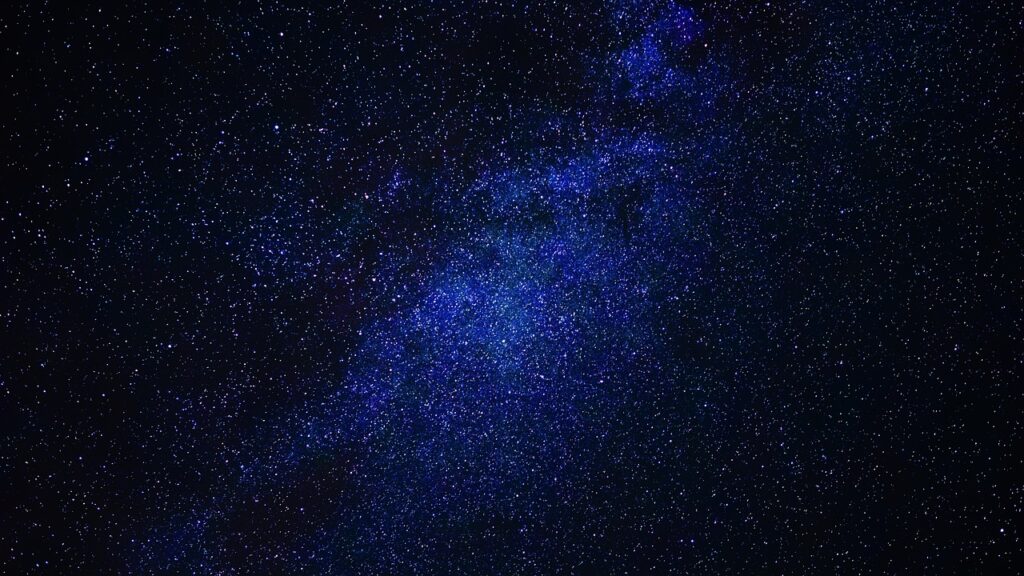
Humanity has always looked up, and the stars have always looked back. Astronomy is not just a science; it is a story of our relentless need to understand the void above us. It is a dance of gravity and light, a choreography written in the language of mathematics, where every celestial body plays its part in a cosmic ballet that has been running for billions of years.
Take black holes, for instance. These are not just holes in space; they are the ultimate enigmas, places where the rules of the universe as we know them break down. When a massive star runs out of fuel, it collapses under its own weight, crushing itself into a point of infinite density—a singularity. Around it, the event horizon acts as a cosmic prison wall. Once you cross it, there is no turning back, not even for light itself. The fabric of spacetime is so warped here that time itself seems to stand still.
For decades, black holes were theoretical curiosities, the stuff of science fiction. Then, in 2015, everything changed. The Laser Interferometer Gravitational-Wave Observatory, or LIGO, detected ripples in spacetime itself—gravitational waves. These waves, predicted by Einstein a century earlier, are the echoes of colossal collisions, like two black holes spiraling into each other. That first detection was more than a scientific milestone; it was a new sense. We had been blind to the universe’s violent events, and suddenly, we could hear them.
But the cosmos is not just about the dramatic and the extreme. It is also about the quiet, slow evolution of worlds. Our own solar system is a living museum of planetary history. Jupiter and Saturn, with their dazzling rings and swarms of moons, are like time capsules, preserving the conditions of the early solar system. And beyond our Sun, we have found thousands of exoplanets—alien worlds orbiting distant stars. Each one challenges our assumptions about what a planet can be, and each one whispers a tantalizing question: could there be life out there?
Then there are the wanderers—the asteroids and comets. These frozen relics are the leftovers of planetary formation, the crumbs from the cosmic table. They are rich in water and organic molecules, the very ingredients that might have seeded life on Earth. This has given rise to a bold idea: panspermia, the notion that life did not start here, but hitched a ride on a comet or an asteroid. Our origins might not be terrestrial at all.
And yet, for all we have learned, the universe is still hiding its biggest secrets. We call them dark matter and dark energy, but those names are just placeholders for our ignorance. Dark matter, which we cannot see or touch, makes up about 27% of the universe. It holds galaxies together through its gravitational pull, yet it remains invisible to every instrument we have. Dark energy is even stranger. It is the force pushing the universe apart at an ever-accelerating rate, making up a staggering 68% of everything. We are floating in a sea of unknowns, and the stars we see are just the foam on the surface.
Astronomy is a mirror that reflects our own curiosity back at us. It is a discipline that asks the biggest questions: Where did we come from? Are we alone? What is the fate of the universe? The answers are not easy, but the journey to find them is what makes us human. The cosmos is not a silent, empty void. It is a living, breathing puzzle, and every discovery only reveals how much more there is to find.