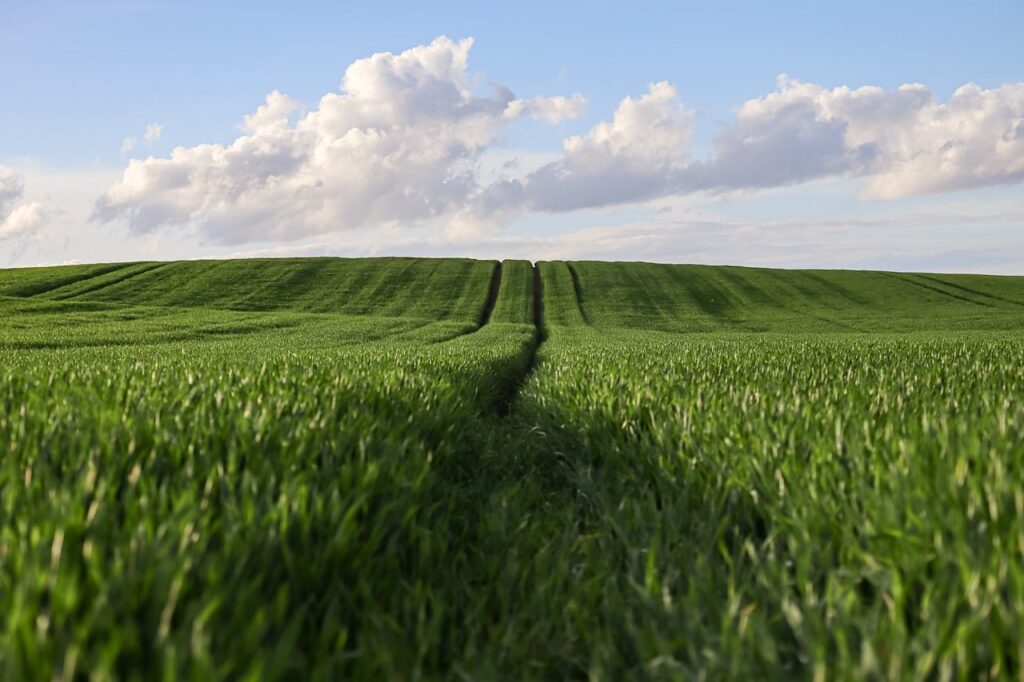
Walk past a farm and you might see soil, crops, and machinery. But look closer, and you are witnessing the result of thousands of decisions about land, labor, capital, and timing. Agricultural economics is the discipline that turns these everyday choices into a system capable of feeding billions of people. It is not a dusty academic corner; it is the operating system of human survival.
The numbers make the stakes clear. By 2050, the planet will host roughly 9.7 billion people. That means more mouths to feed with less arable land, scarcer water, and a climate that refuses to follow old rules. Agricultural economics steps in where simple farming ends, helping answer hard questions: How do we grow enough food without bankrupting farmers? How do we get it to the right places without spoilage? How do we do all this without stripping the soil for the next generation?
At its core, the field leans on the classic dance of supply and demand. On the supply side, a farmer’s output depends on weather, technology, and government policy. On the demand side, what people buy is shaped by taste, population growth, and how much money they have. The equations that economists use, with terms for price, technology, policy, population, and income, are not just chalkboard decoration. They are roadmaps for predicting whether a drought in one region will cause bread prices to spike in another.
Technology has rewritten the playbook. Precision agriculture, which uses drones, satellite images, and machine learning, lets a farmer treat a single field as a patchwork of micro-environments rather than one uniform block. Instead of spreading water and fertilizer evenly, they apply them only where needed. The results, often modeled with production functions that weigh capital, labor, and productivity, show how smart tools can lift output while cutting waste.
Trade is the other half of the story. No country can grow everything it needs, and that is where comparative advantage comes in. When a nation focuses on what it produces at the lowest opportunity cost, everyone ends up better off. Yet this logic gets tangled in tariffs, quotas, and subsidies, which can distort markets and hurt the very people they aim to help. Understanding those distortions is part of the economist’s job.
None of this is abstract. Every time you buy a carton of eggs or a bag of rice, you are touching the outcome of agricultural economics. The field decides whether a farmer in a remote village can afford seeds, whether a city market stays stocked through a heatwave, and whether a country can feed itself without relying on imports. It is the quiet engine behind modern life, and it deserves far more attention than it gets.