
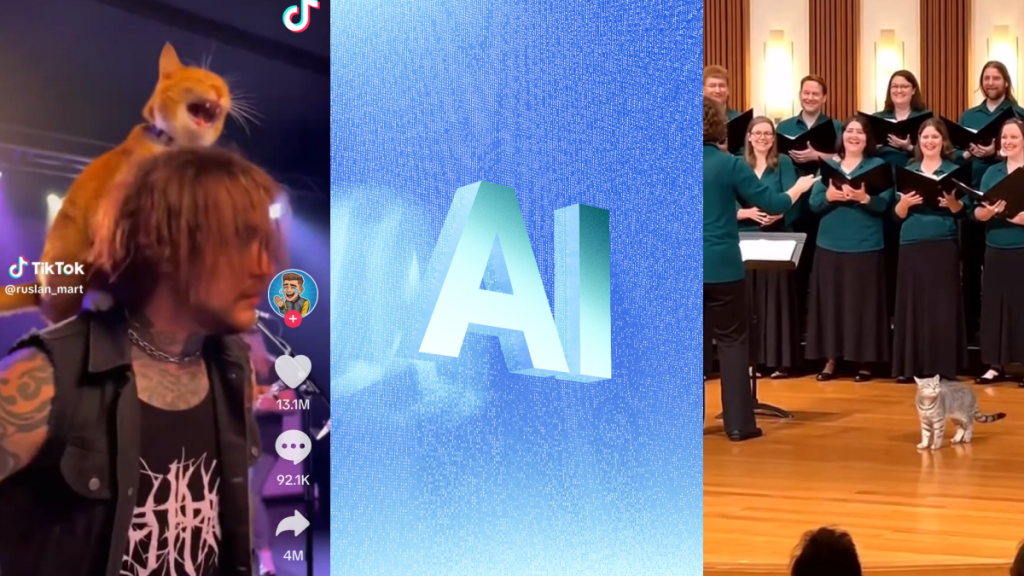
A recent trend on social media features musicians paired with animals in unusual, often humorous situations. One video that has amassed 13 million likes and 113 million views on TikTok appears to show a metal singer being climbed on by a cat. At first glance the clip seems authentic, but closer inspection reveals inconsistencies that suggest it was generated by artificial intelligence. The cat’s movements are unnatural and defy physics—a hallmark of AI‑generated content.
A similar example is a Facebook video of a cat accompanying a choir, which has received nearly 3 million likes. This clip also displays mismatches, such as the singers’ mouths and the cat’s meows being out of sync. These videos are part of a broader wave of AI‑generated material that has become increasingly prevalent on social platforms. Earlier trends have included fake surveillance footage of cute animals, uncanny‑valley babies, and humans cleaning whales with heavy machinery.
The popularity of such videos underscores the need for social‑media users to recognize the potential for AI‑generated content. Realistic but fabricated videos have significant implications for how we consume and interact with online material. As the technology continues to evolve, we can expect more sophisticated and convincing AI‑generated videos, raising questions about authenticity and trustworthiness.
Consequently, social‑media platforms must develop effective methods for detecting and labeling AI‑generated content. The proliferation of these videos also highlights the importance of critical thinking and media literacy in the digital age. Users should remain aware of the possibility of fake or manipulated material and approach online information with a healthy dose of skepticism. By doing so, we can foster a more informed, discerning online community and help curb the spread of misinformation and disinformation.




Comments are closed for this story.