
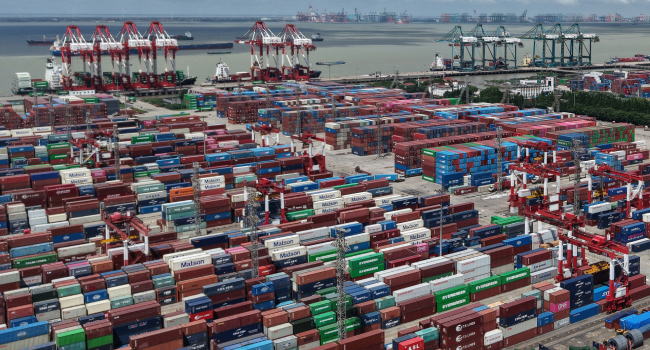
China’s exports fell in October, marking the first decline in eight months, according to official data released on Friday by the General Administration of Customs. Shipments dropped 1.1 percent year‑on‑year, missing Bloomberg’s forecast of a 2.9 percent rise. In the same month, imports increased by 1.0 percent, also below Bloomberg’s prediction of a 2.7 percent gain.
The downturn came amid escalating trade tensions between China and the United States, just before a meeting between Chinese President Xi Jinping and U.S. President Donald Trump. In the weeks leading up to the summit, both countries had imposed tariffs on each other’s goods, and Beijing announced new restrictions on exports of rare‑earth technologies—an industry dominated by China and vital to defense and automotive manufacturers. Trump responded by threatening an additional 100 percent tariff on Chinese products, a warning that was later withdrawn after the leaders met in South Korea.
During the meeting, the two sides agreed to suspend a range of measures for a year, effectively pausing the trade war. As part of the agreement, Washington reduced a blanket tariff on Chinese goods to 10 percent, while Beijing eased restrictions on rare‑earth exports, offering relief to European businesses. China also lifted extra tariffs on U.S. agricultural products, including soybeans, a key export for American farmers.
Customs data show that China’s imports from the United States fell 11.6 percent month‑on‑month in October, whereas its shipments to the United States rose 1.8 percent. Economists attribute the export decline to Chinese exporters front‑loading trade to avoid high U.S. tariffs. With the trade war on hold for a year, exports are expected to normalize, but China will need to rely more on domestic demand to sustain growth.
The drop in exports is a notable development in the ongoing Sino‑U.S. trade tensions. As the world’s two largest economies, their trade relationship significantly influences the global economy. The agreement to suspend tariffs and ease trade restrictions is a positive step toward resolving the dispute, though the future trajectory remains uncertain.




Comments are closed for this story.