
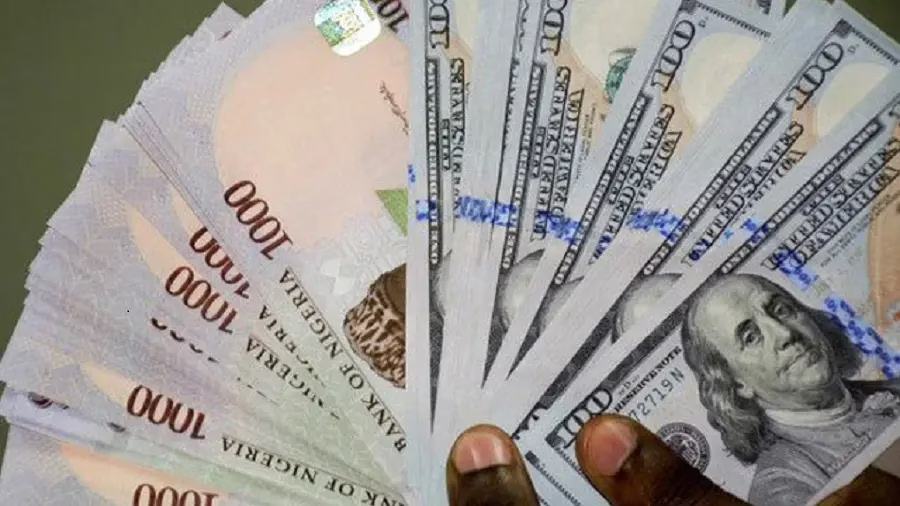
The Nigerian naira began the week on a downward trend, depreciating against the United States dollar in both the official and parallel exchange markets. According to data from the Central Bank of Nigeria, the official rate fell to N1,437.29 per dollar on Monday, down from N1,436.58 at the close of business on Friday—a decline of N0.71. In the parallel market, the naira also slipped, reaching N1,465 per dollar on Monday compared with N1,450 on Friday, a drop of N15.
This decline occurs despite a recent increase in Nigeria’s external reserves, which rose to $43.35 billion as of November 7, up from $43.32 billion the day before. The naira’s weakness follows a mixed performance last week, highlighted by the United States designating Nigeria a Country of Particular Concern under President Donald Trump. The foreign‑exchange market has been closely watched because of its significant role in the nation’s economy.
The Central Bank of Nigeria has been working to stabilize the naira, but the currency continues to face challenges, including a shortage of dollars and high demand for foreign exchange. Efforts to increase dollar supply and curb demand have produced mixed results, leading to ongoing fluctuations in the naira’s value. A weaker naira makes imports more expensive, raising consumer prices and production costs for businesses, which is a major concern for both firms and individuals that rely on foreign exchange for imports and other transactions.
As Nigeria’s economy evolves, the performance of the naira will remain under close scrutiny by investors, businesses, and policymakers. While the rise in external reserves is a positive development, its impact on the naira’s value is still uncertain. The Central Bank of Nigeria will likely continue to play a crucial role in shaping the foreign‑exchange market, and its policies will be closely watched in the coming days and weeks. Monitoring the naira’s fluctuations and their broader economic implications is essential.



Comments are closed for this story.