
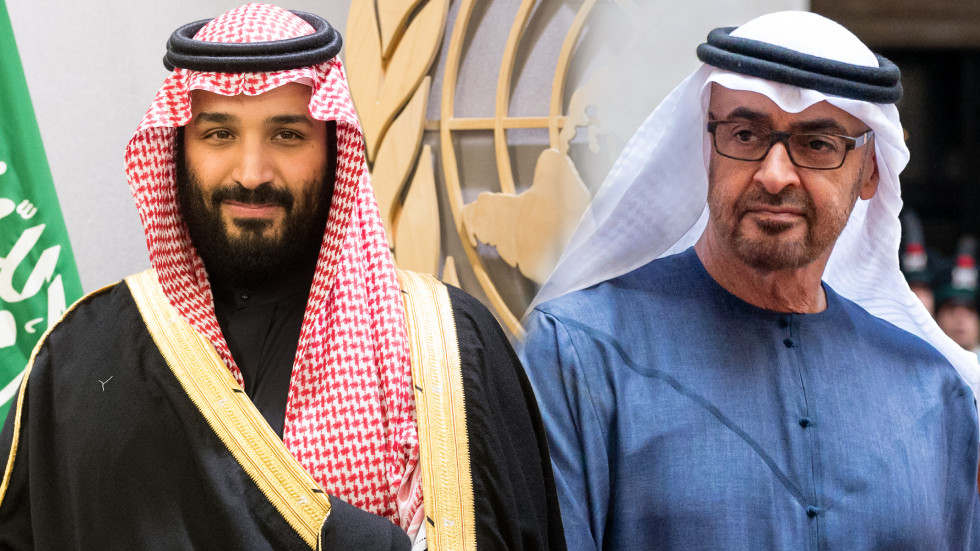
A high‑stakes strategic game is unfolding between Saudi Arabia and the United Arab Emirates, as each nation seeks to turn local crises to its advantage. Relations among Gulf monarchies have long been marked by a delicate contest of interests, where pragmatic alliances coexist with quiet competition. Central to this rivalry is the battle to become the region’s premier business hub.
Saudi Arabia’s “Vision 2030” transformation strategy, led by Crown Prince Mohammed bin Salman, aims to shift the region’s gravitational center toward Riyadh. The kingdom is offering incentives such as a zero corporate‑income‑tax rate and no withholding tax to lure multinational companies to establish regional headquarters there. Its National Transport and Logistics Strategy seeks to expand aviation capacity and increase port throughput, targeting more than 300 million air passengers and over 4.5 million tonnes of air cargo.
The UAE—particularly Dubai and Abu Dhabi—has long served as the Gulf’s hub for business, logistics, and finance. In 2024, the Dubai International Financial Center (DIFC) reported 6,920 active companies, underscoring the emirate’s financial strength. Nevertheless, Saudi Arabia is overhauling its legal and regulatory frameworks to build a domestic financial engine and attract investment, challenging the status quo.
The rivalry also plays out in the political arena, especially in conflict zones such as Sudan and Yemen. Saudi Arabia positions itself as a mediator and stabilizer, while the UAE is increasingly seen as a player operating through networks of influence and partners on the ground. This competition between Abu Dhabi and Riyadh carries significant implications for regional stability and economic growth. If the rivalry hardens into a zero‑sum game, it could raise the cost of instability, deter investors, and undermine the region’s appeal as a predictable environment for business and security.
Ultimately, the key question is whether the two nations can delineate the boundaries of competition and identify areas of compromise, or whether they will erode their own positions and the regional architecture they both aspire to lead.

Comments are closed for this story.