
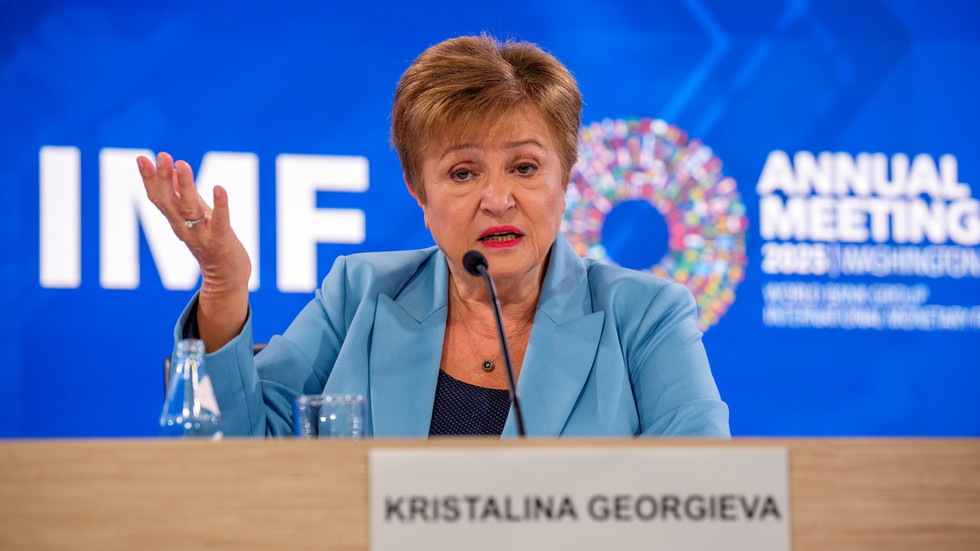
The International Monetary Fund (IMF) has projected that U.S. public debt will reach 140% of the nation’s GDP by 2031 under current fiscal policies, highlighting significant risks for both the American and global economies. The warning comes as the total U.S. national debt surpasses $38 trillion, with the federal budget deficit widening to approximately $1.8 trillion in the last fiscal year.
According to the IMF’s annual Article IV review of U.S. economic policies, the rising debt burden and increasing short-term borrowing pose growing threats to financial stability worldwide. The fund emphasized that the United States must implement a credible fiscal consolidation plan to ensure debt follows a sustainable downward trajectory. “The current account deficit is too big,” stated IMF Managing Director Kristalina Georgieva, noting that the administration acknowledges the challenge.
The report urges Washington to collaborate with international partners to reduce trade barriers and address policy distortions with negative cross-border effects. It recommends that any national security-related trade measures, such as tariffs or export controls, should be applied in a narrowly targeted manner.
Despite fiscal concerns, the IMF expects U.S. economic growth to remain resilient at 2.4% in 2026. However, inflation is projected to remain above the Federal Reserve’s 2% target until early 2027, reflecting lingering economic uncertainty.
The U.S. debt, widely regarded as a safe global asset, plays a critical role in setting international interest rate benchmarks and attracting foreign capital. Yet, the IMF cautions that unchecked debt growth could elevate borrowing costs, fuel inflation, and undermine economic stability domestically and abroad. The fund’s assessment was completed before the recent Supreme Court decision invalidating many of President Donald Trump’s tariffs; the IMF indicated it would evaluate the ruling’s implications in subsequent analysis.
The findings underscore the interconnected nature of fiscal health in the world’s largest economy with global financial conditions. The IMF’s call for policy action points to the urgent need for balancing short-term economic support with long-term debt sustainability to mitigate systemic risks.



Comments are closed for this story.