
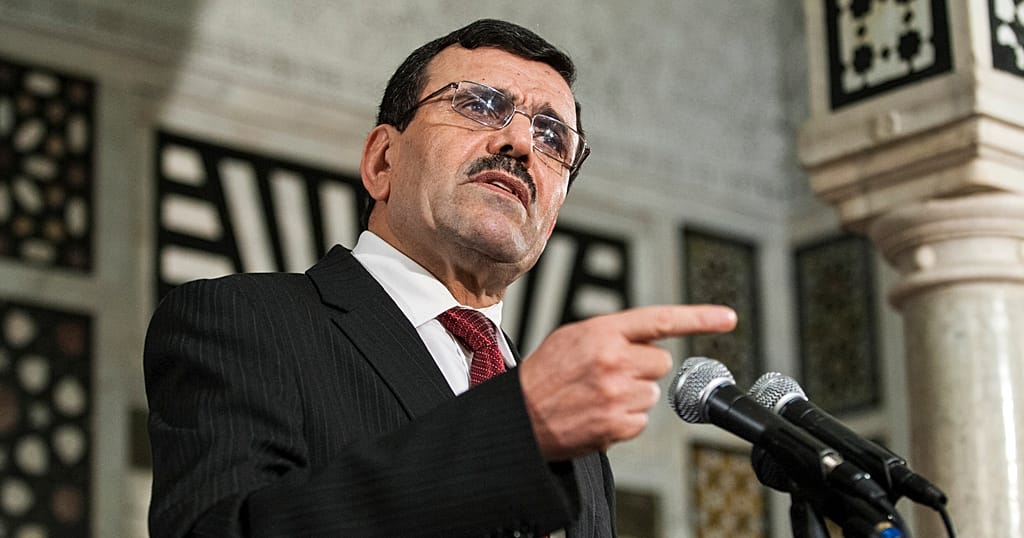
A Tunisian appeals court on Thursday reduced former Prime Minister Ali Larayedh’s prison sentence from 34 to 24 years for his role in facilitating the travel of Tunisian militants to Syria. The verdict concludes a high-profile case, known locally as “Tasfir,” that has deeply influenced the nation’s political landscape since the Arab Spring.
The decision by the Tunis Court of Appeal marks a decrease of ten years from the original sentence handed down in May 2025. Prosecutors had initially sought the 34-year term, which was upheld in the first trial. Larayedh, a leading figure in the Ennahda movement, was found guilty of organizing and supporting Tunisian nationals who joined armed groups in Syria during the conflict there.
His party, the Islamist-inspired Ennahda, immediately rejected the ruling, labeling it “politically motivated.” The group has consistently argued that the case is part of a broader campaign to sideline the opposition following the 2021 suspension of parliament by President Kais Saied. The first trial was criticized by observers and rights groups for relying on circumstantial evidence and lacking conclusive proof of direct orders from Larayedh.
Alongside Larayedh, seven other defendants were sentenced in the same ruling, with terms ranging from three to 28 years. The collective verdicts represent one of the largest judicial actions against alleged opponents of the current government.
Larayedh served as Tunisia’s head of government from 2013 to 2014, a tenure that followed the ousting of longtime dictator Zine El Abidine Ben Ali and preceded a period of intense political instability and security challenges. His administration was repeatedly accused by security services of turning a blind eye to militant recruitment for Syria, allegations Ennahda has denied.
The “Tasfir” case has been a focal point of contention between Ennahda and the presidency, symbolizing the unresolved tensions from Tunisia’s democratic transition. Human rights organizations have warned that such prosecutions risk entrenching political polarization rather than fostering accountability.
With this sentencing, the legal saga for Tunisia’s former premier appears concluded, barring a potential cassation appeal. The outcome reinforces the judiciary’s current stance against figures linked to the pre-2021 political order and underscores the enduring legacy of the Syrian conflict on Tunisian domestic affairs. The case continues to shape perceptions of justice and political exclusion in the North African nation.




Comments are closed for this story.