
Nigeria’s banking sector has emerged from a major recapitalisation drive with enhanced capacity to mobilise capital, positioning the industry as a cornerstone of the federal government’s ambition to grow the economy to $1 trillion.
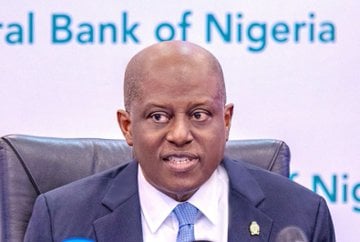
Central Bank of Nigeria (CBN) Governor Olayemi Cardoso confirmed on Tuesday that 32 banks have now met the new, higher minimum capital requirements, calling the outcome a transformative turning point. Speaking at the inaugural Africa Capital Forum in London, he stated the previous financial system is “dead and buried,” replaced by one with greater liquidity and transparency. “Nigerian banks play a dominant role on the African continent and in the United Kingdom. They are our ambassadors,” Cardoso said, highlighting their expanded potential to fund economic growth.
The recapitalisation exercise, a core component of the CBN’s 2024 financial sector reforms, required banks to meet strict new thresholds through fresh capital, mergers, or acquisitions. A key milestone was the significant domestic investment, with over 72% of the capital raised locally. Akin Ogunranti of Zenith Bank noted this signals deepening capital markets and strong domestic confidence. Yemisi Edun of First City Monument Bank confirmed the exercise has already expanded industry lending capacity, while Segun Alebiosu of First Bank emphasised banks are now better equipped for larger transactions and to attract international capital.
This strengthened position is supported by Nigerian banks’ extensive regional and international networks. Oliver Alawuba of United Bank for Africa (UBA) noted over 65% of the group’s revenue now originates outside Nigeria. Miriam Olusanya of Guaranty Trust Bank reported a restoration of confidence in global banking relationships.
The Africa Capital Forum, convened by the CBN alongside the UK Foreign, Commonwealth and Development Office, gathered financial leaders, development institutions, and global investors to explore strategies for scaling capital mobilisation across Africa. Special Adviser to the President Sanyade Okoli stressed that government funding alone is insufficient, requiring partnerships for “sticky, equity capital.”
Cardoso asserted the reforms have fostered an unprecedented level of consistent stability in the financial system, which he expects to be sustained. This stability, underpinned by a recapitalised banking sector, is presented as a critical enabler for Nigeria’s long-term economic expansion and its role in attracting broader African investment.

Comments are closed for this story.