
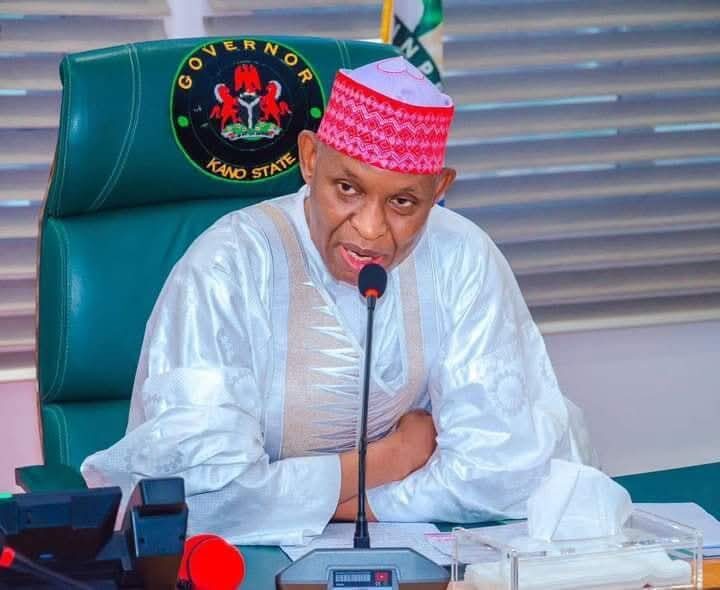
Kano State Governor Abba Kabir Yusuf has firmly rejected claims that his recent defection from the New Nigeria Peoples Party (NNPP) to the All Progressives Congress (APC) constitutes a betrayal of the Kwankwasiyya political movement. In a public address to his supporters, Yusuf defended his decision, attributing it to internal crises within the NNPP that he said he had long warned about.
Yusuf maintained that he and his allies had foreseen the party’s instability and had advised corrective measures, which were ignored. He argued that his early departure from the NNPP helped prevent wider political disruption in Kano State, bringing a sense of calm to the state’s political environment.
Addressing accusations of betrayal, the governor questioned whether members of the Kwankwasiyya movement were consulted before the NNPP’s leadership made decisions that led to its decline. “Isn’t that also betrayal?” he asked rhetorically, underscoring his view that the move to the APC was a pragmatic and strategic choice rather than a personal or ideological defection.
Yusuf also dismissed suggestions that his decision was influenced by former APC National Chairman Abdullahi Ganduje. While acknowledging mutual respect between them, he emphasized that he is now the leader of the APC in Kano State and cannot be subject to instructions from others. “What exists between me and Ganduje is mutual respect. But he cannot give me instructions because I am the leader,” he stated.
The governor highlighted the political advantage of his new affiliation, noting that he now stands among over 30 APC governors nationwide—a shift he framed as progress rather than regression. He urged supporters to view the defection in the context of broader political realignment and governance stability.
Yusuf’s remarks come amid ongoing debates over political loyalty and party dynamics in Nigeria, particularly in Kano, a state with a history of shifting allegiances and influential political blocs. His stance signals a recalibration of power within the state’s political landscape as the 2027 elections approach.

Comments are closed for this story.