
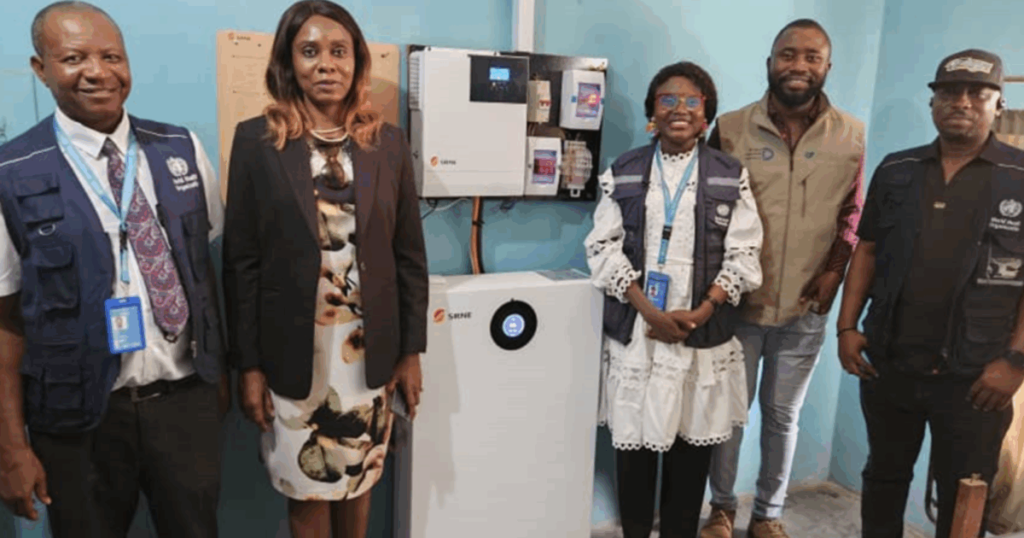
Solar power installations have significantly improved healthcare delivery in two primary health centres in Nigeria, according to the World Health Organisation (WHO). The intervention, part of the HealthCREST initiative, has reduced service disruptions by more than 80 per cent, enabling round-the-clock immunisation, maternity care, and emergency services in Rivers and Akwa Ibom states.
Unreliable electricity has long affected Nigeria’s primary healthcare system, with an estimated 40-50 per cent of facilities experiencing power outages that jeopardise essential services. At Rumuigbo Primary Health Centre in Rivers State, staff previously relied on torchlights and mobile phones during emergencies. “You cannot tell a mother in pain to wait because the light is gone,” said Alaba Douglas, a Community Health Extension Worker.
In early 2025, the Federal Ministry of Health, supported by WHO and state authorities, installed 5-kilowatt solar photovoltaic systems with battery storage in two facilities. The upgrade has led to measurable improvements: nighttime deliveries at Rumuigbo increased from around 40 to more than 50 per month, while generator fuel costs fell sharply. Stable electricity has also safeguarded vaccine storage, with immunisation officers reporting greater reliability.
Patients have noted improved care. “The lights stayed on throughout my labour. I felt safe, and care was steady,” said Onwumeh Kikachianyi Mavis, a mother who delivered at one of the centres.
The project has also lowered carbon emissions and boosted confidence among health workers and communities. “Reliable power is essential for safe delivery, vaccination, and emergency care,” said WHO Representative in Nigeria, Pavel Ursu. He added that the pilot demonstrates how clean energy can strengthen primary healthcare.
Zakari Mohammed, Director of Climate Change and Environmental Health at the Federal Ministry of Health, described the initiative as a scalable model already benefiting communities. The intervention was funded by the UK’s Foreign, Commonwealth and Development Office and implemented in partnership with Nigerian government agencies.
While the pilot has delivered positive results, WHO stressed that thousands of primary health centres across Nigeria still lack reliable electricity. The agency called for expanded investment to extend clean energy access and improve healthcare delivery nationwide.




Comments are closed for this story.