
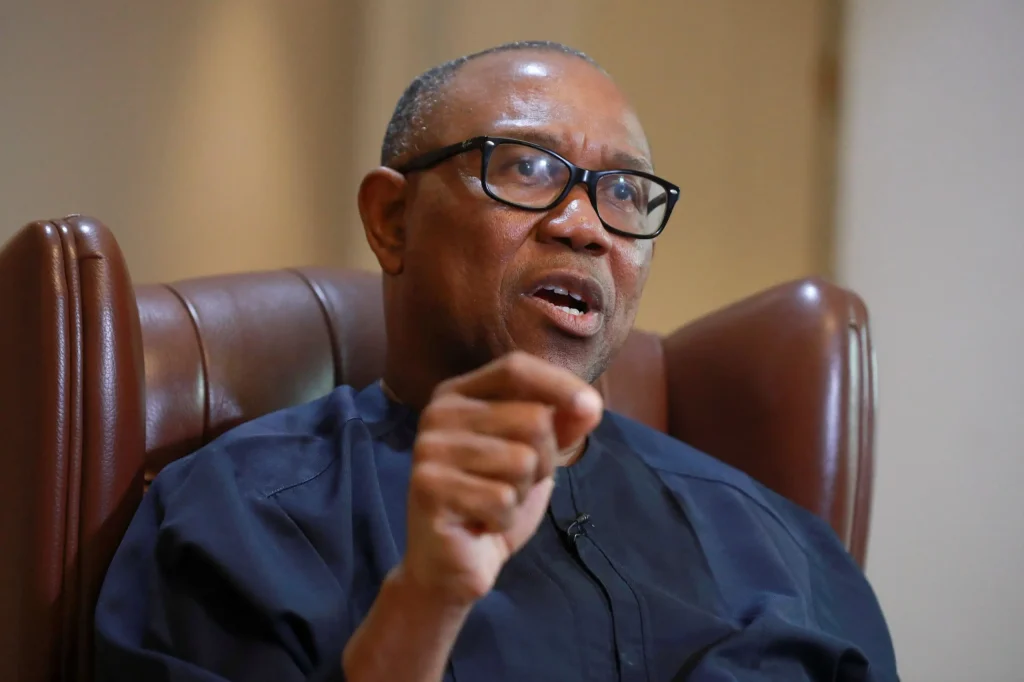
Former Labour Party presidential candidate Peter Obi has expressed confidence in his ability to garner substantial support from northern Nigeria ahead of the 2027 elections. He asserts that his development plans for the region are unparalleled by any other contender. During an appearance on Prime Time on Arise Television on Monday, Obi outlined his vision to transform northern Nigeria, which he described as the country’s greatest economic asset. He emphasized the potential of agriculture as a key sector that could surpass oil revenues, stating, “Nobody can do what I intend to do in the North. We will change the North. Our greatest asset as a country is in the North. We can make more money from agriculture than we make from oil.”
In addition to his focus on economic development, the former Anambra State governor highlighted the importance of democratic institutions. He called on the government to actively support opposition parties, arguing that a strong opposition is essential for effective governance and accountability. “The government should protect the opposition. In fact, they should make opposition stronger and make it work,” he added. Obi’s remarks come as Nigeria prepares for the next presidential election cycle, where political dynamics in the north remain a critical factor in national politics. Historically, the region has played a decisive role in determining electoral outcomes due to its large population and bloc voting patterns.
Obi’s focus on northern development represents a strategic shift, as previous campaigns have often centered on southern strongholds. His emphasis on agricultural transformation aligns with broader discussions about economic diversification in Nigeria, which has long relied heavily on oil revenues. Political analysts note that Obi’s approach could potentially reshape electoral calculations, particularly if he can present concrete plans to address longstanding challenges in the region, such as poverty, education, and infrastructure deficits.
The 2027 election is expected to feature multiple high-profile candidates, with Obi positioning himself as a transformative figure capable of bridging regional divides and implementing economic reforms. His campaign strategy appears to center on presenting himself as a candidate with practical solutions rather than relying solely on traditional political alliances. As the political landscape continues to evolve, observers will closely monitor how Obi’s northern-focused message resonates with voters and whether it can translate into tangible electoral support in one of Nigeria’s most politically influential regions.
Comments are closed for this story.