
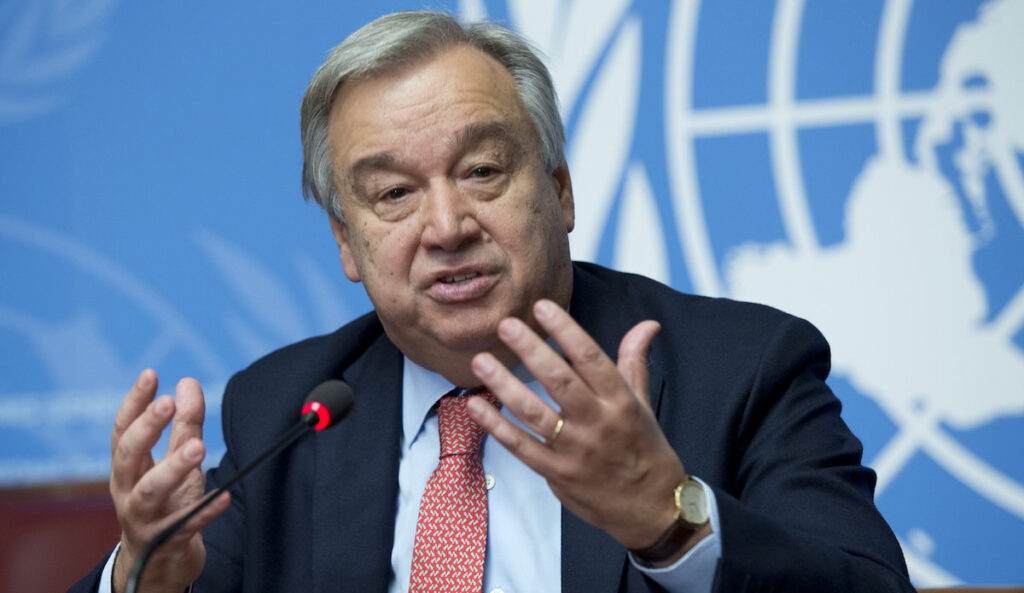
The United Nations has welcomed Iran’s announcement that the Strait of Hormuz is fully open to commercial vessels during the current ceasefire period. UN Secretary-General António Guterres described this move as a positive step toward easing regional tensions, according to spokesperson Stéphane Dujarric. In a statement on Friday, Dujarric emphasized the UN’s position that the full restoration of navigational rights and freedoms in the strait is essential. He noted that the Secretary-General remains fully supportive of diplomatic efforts to find a peaceful resolution to the ongoing conflict in the Middle East.
Dujarric added that the reopening of the strait, in conjunction with the ceasefire, could help build confidence between the involved parties and strengthen dialogue facilitated by Pakistan. This announcement follows confirmations from both U.S. President Donald Trump and Iran’s Foreign Minister Abbas Araghchi that the waterway is now open to commercial traffic. Trump stated in a social media post that Iran had declared the strait “fully open and ready for full passage,” while Araghchi echoed this on X, indicating that the passage is “completely open” in accordance with the ceasefire, including in Lebanon, and will remain so for its duration.
However, Trump also cautioned that the blockade would “remain in full force” until the U.S. completes its “transaction” with Iran. Earlier, he had announced “major combat operations” against Iran on February 28, which involved joint U.S.-Israeli strikes on key sites. A temporary ceasefire was later brokered by Pakistan following negotiations in Islamabad aimed at reducing hostilities. Despite these efforts, U.S.-Iran talks in Pakistan failed to produce a peace deal, with Iran’s nuclear program remaining a significant sticking point.
Trump had also warned that the U.S. would impose a blockade on the Strait of Hormuz starting Monday, April 13, a move that could have serious implications for global energy supplies due to the strait’s strategic importance. The reopening of the Strait of Hormuz is viewed as a critical development in efforts to stabilize the region and ensure the free flow of international maritime traffic. The UN and other international actors continue to advocate for sustained dialogue and a lasting resolution to the ongoing conflict.



Comments are closed for this story.