
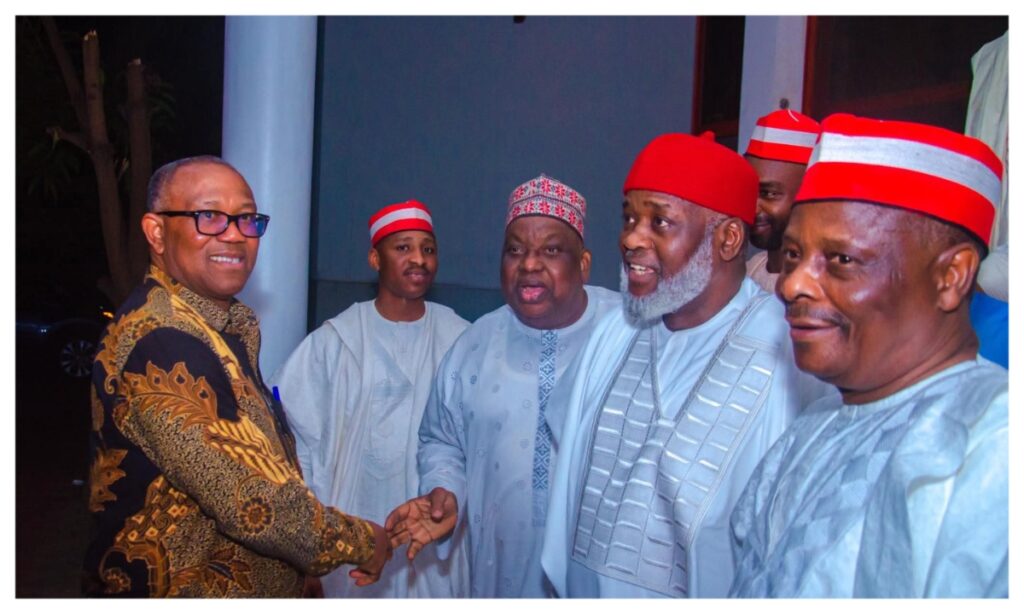
Former presidential candidate Peter Obi and National Democratic Congress (NDC) chairman Henry Seriake Dickson visited former governor Rabiu Musa Kwankwaso at his Maitama residence in Abuja on Friday night. The meeting, confirmed by Kwankwaso’s media aide Hon. Saifullahi Hassan, was described in a brief statement as focusing on “political developments in the country.” No further details of the discussion were released.
Several senior members of the Kwankwasiyya movement also attended, including former Kano State deputy governor Nasiru Yusuf Gawuna; Senator representing Kano Central, Rufa’i Sani Hanga; senior NNPP figure Buba Galadima; and House of Representatives member for the Kura, Madobi and Garun Malam Federal Constituency, Yusuf Datti Kura. Additional Kwankwasiyya leaders were present, underscoring the broad representation of the faction.
The gathering comes amid growing speculation about realignments ahead of the 2027 presidential election. Recent reports have suggested that Obi and Kwankwaso may be exploring a joint ticket, an idea that has attracted attention from political observers and party strategists. While the statement did not confirm any formal alliance, the presence of key figures from both the NDC and the Kwankwasiyya camp indicates a willingness to engage in dialogue about future cooperation.
Peter Obi, the 2023 presidential candidate of the Labour Party, has been positioning himself as a central figure in the emerging opposition bloc. Henry Dickson, as NDC national chairman, leads a party that has traditionally played a marginal role but now seeks greater relevance through strategic partnerships. Kwankwaso, a former governor of Kano State and a leading voice in the Kwankwasiyya movement, remains influential in northern politics and has previously expressed openness to coalition arrangements.
The visit also highlights the continuing importance of informal “courtesy” meetings in Nigeria’s political landscape, where behind‑the‑scenes discussions often precede public announcements of alliances or policy positions. As the 2027 election cycle gathers momentum, stakeholders will watch for any formal statements or joint declarations that may arise from this encounter. Until then, the meeting adds another layer to the evolving dynamics among opposition parties and regional power blocs, suggesting that coalition building remains a priority for those seeking to challenge the incumbent administration in future elections.


Comments are closed for this story.