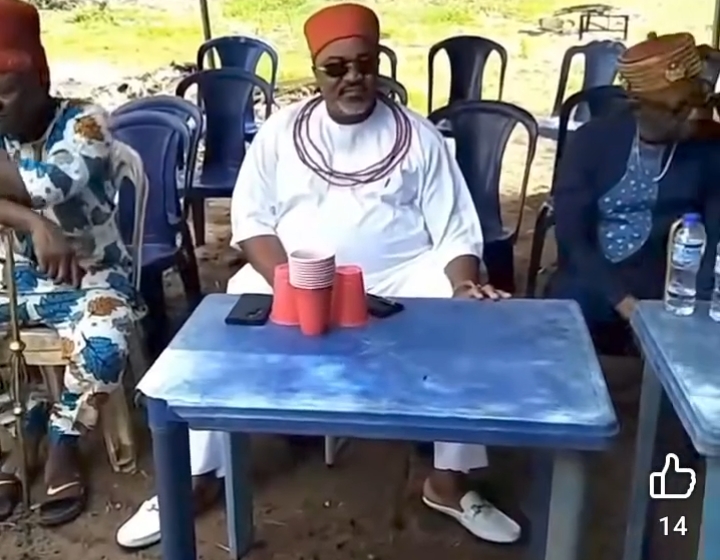
Traditional ruler of Awka Kingdom, Imperial Majesty Obi Austin Ndigwe, has publicly declared that he would accept imprisonment rather than relinquish the throne bestowed on him by his people. The statement, recorded in a village square and circulating widely on social media, underscores the deepening dispute over the rightful monarch of Awka.
In the video, Ndigwe affirmed that he was crowned “Obi of Awka” by the community itself, not by the state, and pledged to retain the seat that his people have given him. “If performing the function given to me by my people means I will go to jail, I am ready for it,” he told the assembled crowd, which responded with applause.
The declaration follows a report released by a panel appointed by Anambra Governor Prof. Chukwuma Soludo to investigate the competing claims to the Awka throne. The panel concluded that Obi Gibson Nwosu is the sole legitimate monarch recognised by the state. Governor Soludo has repeatedly stated that Nwosu is the only government‑recognised ruler of Awka and warned that any individual who continues to present themselves as the kingdom’s monarch risks legal action.
Last week members of the Ozo Society of Awka visited the governor’s office, where Soludo reiterated his position and indicated that there would be no need for further contestation once the state’s decision is respected. The governor’s warning that Ndigwe could be jailed for “usurping” the throne was met with defiance in the recent video, which many interpreters view as a direct challenge to Soludo’s authority.
The standoff reflects a broader tension between traditional authority and state institutions in Nigeria. While the government seeks to formalise chieftaincy recognitions through official channels, community members in several Igbo locales continue to assert the primacy of indigenous selection processes. In Awka, the dispute pits two powerful families against each other, each backed by distinct factions within the kingdom.
Legal experts note that enforcement of the governor’s warning would depend on whether Ndigwe’s actions constitute a criminal offence under Nigerian law, such as fraud or false representation. So far, no arrest has been reported, and Ndigwe’s supporters argue that the governor’s stance infringes on the community’s right to choose its own leader.
The episode has sparked vigorous discussion on social media, with some users urging the government to refrain from intervening in a matter that the people have already settled, while others call for swift enforcement of the panel’s findings to restore order.
As the clash between traditional customs and state authority continues, the next steps remain uncertain. Whether the governor will pursue legal action against Ndigwe, or seek a mediated settlement, will likely shape the future of chieftaincy politics in Awka and set a precedent for similar disputes across the region.