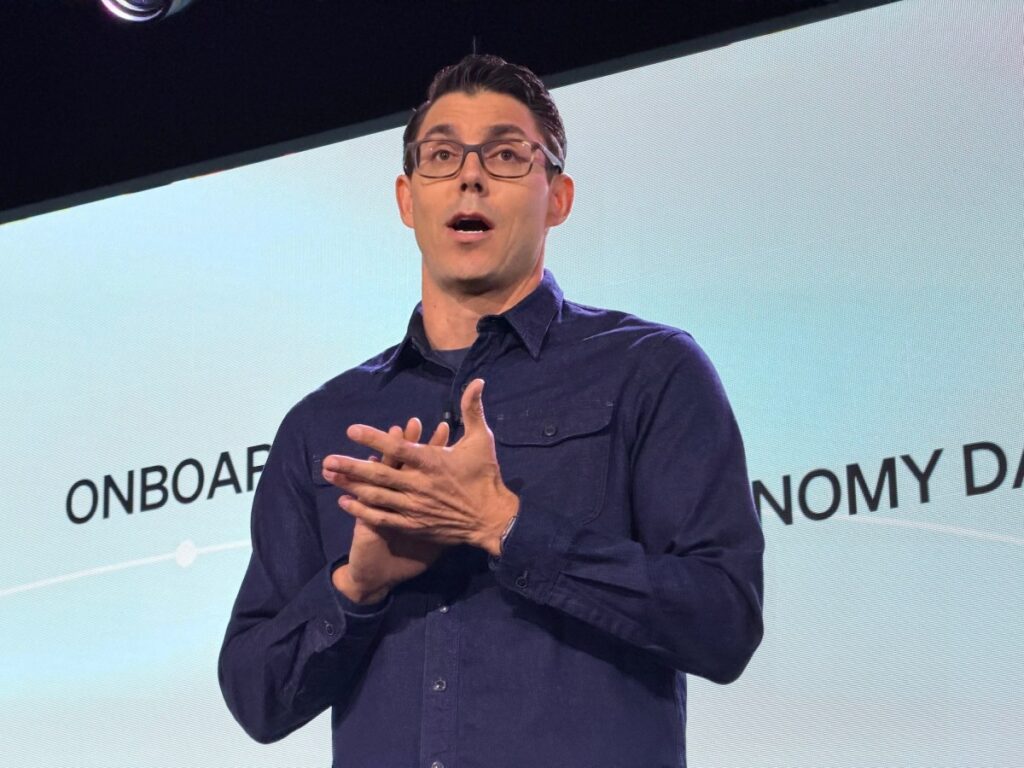
Investors continue to back RJ Scaringe, the MIT‑trained engineer who built electric‑vehicle maker Rivian into a multibillion‑dollar company and is now steering two newer ventures, Also and Mind Robotics. In the past twelve months Scaringe has secured a further $900 million for Mind Robotics and $300 million for Also, bringing the total capital raised across his three enterprises to more than $13 billion.
The latest round for Mind Robotics – an industrial‑AI and robotics start‑up founded last year – was led by Eclipse Ventures, a firm whose partner Jiten Behl has worked alongside Scaringe since Rivian’s early days. Behl, who previously served as Rivian’s chief growth officer, said Scaringe’s ability to articulate complex technical ideas in a clear, credible manner is a key factor in attracting capital. “He explains a problem or opportunity without overselling or understating it, and that honesty resonates with investors,” Behl told TechCrunch.
Also, an electric micromobility company launched in 2025, raised $105 million in its seed round, a figure that quickly grew to over $300 million as additional investors, including DoorDash, joined. Such large seed financings have typically been limited to high‑profile AI or defense start‑ups, making the size of Also’s early backing notable.
Scaringe’s fundraising record places him among a small group of entrepreneurs who have repeatedly secured billions across unrelated businesses. Like Elon Musk, Sam Altman and Palmer Luckey, he combines deep engineering expertise with a strong sense of product design and market appeal. Eclipse partner Joe Fath highlighted that Scaringe “understands both the technical details and the emotional drivers for customers, whether they are consumers or commercial buyers,” a blend that has distinguished Rivian’s trucks and SUVs and now informs the positioning of his newer companies.
Rivian itself raised more than $11 billion before its 2021 initial public offering, which generated nearly $12 billion in gross proceeds and lifted the company’s market value to $100 billion at debut. Although Rivian’s market cap has since fallen to around $18 billion amid sector‑wide challenges, the firm continues to attract strategic partners, most recently a $5.8 billion joint venture with Volkswagen and a robotaxi partnership with Uber valued at up to $1.25 billion.
The speed of Scaringe’s recent capital raises suggests momentum rather than saturation. Mind Robotics received $115 million in its first year, followed by a $500 million round in March and a $400 million round this week. Also’s funding trajectory mirrors this pattern, moving from an initial $105 million seed to a $300 million total within months.
Industry observers note that Scaringe’s appeal lies not only in the projects themselves but also in his personal style. He is described as confident yet unpretentious, focused on the product rather than on cultivating a personal brand comparable to high‑profile founders. This approach, combined with an ability to make each stakeholder feel uniquely valued, appears to sustain investor enthusiasm even as he splits time between Palo Alto, Irvine, Rivian’s factories in Illinois and the upcoming plant in Georgia, and family commitments.
The continued flow of capital into Scaringe’s portfolio underscores a broader investor willingness to back high‑technology hardware ventures that demonstrate clear technical depth and market potential. As the founder expands his footprint in electric mobility and industrial robotics, the coming years will reveal whether his multi‑company model can deliver the scale of impact investors anticipate.