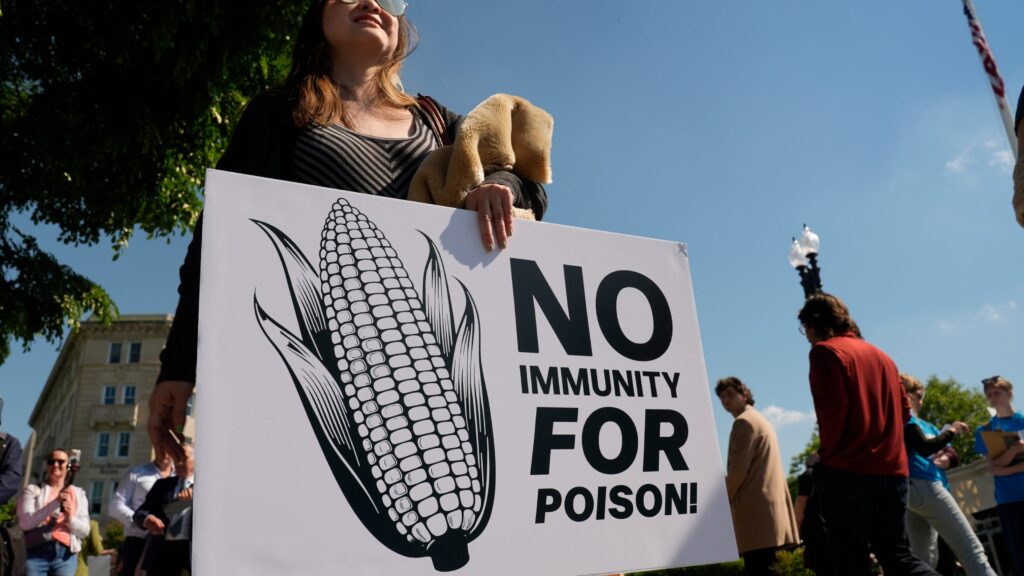
The Supreme Court dealt a major blow to cancer victims and their families on June 25, shutting down thousands of lawsuits against the maker of the popular weedkiller Roundup. In a 7-2 decision, the justices ruled that Bayer, the company behind the product, cannot be sued for failing to warn users that Roundup might cause cancer.
At the heart of the dispute is the Environmental Protection Agency, which has not determined that Roundup poses a cancer risk and does not require a warning label to that effect. The court’s majority said this federal stance overrides any state laws that would allow such lawsuits, effectively blocking claims from people who developed cancer after using the herbicide.
Bayer, which acquired Monsanto—Roundup’s original maker—in 2018, faced billions in potential liability from a flood of litigation over glyphosate, the key ingredient in Roundup. While the company has stopped using glyphosate in residential Roundup products, it warned that continued lawsuits might force it to halt sales to U.S. farmers, a move agricultural groups called a “devastating risk to America’s food supply.”
The Trump administration backed Bayer, a position that alarmed some in the Make America Health Again movement, who advocate for reducing pesticide use. Public health groups argued the lawsuits were necessary because the EPA has failed to protect Americans from glyphosate’s risks.
Roundup, introduced in the 1970s, quickly became America’s top-selling herbicide and a staple of farming. Lawsuits began after a World Health Organization agency in 2015 classified glyphosate as “probably carcinogenic to humans”—a finding Bayer disputes.
John Durnell, who used Roundup for over two decades as the “spray guy” for his St. Louis neighborhood association, believes glyphosate caused his non-Hodgkin lymphoma. In 2023, a jury awarded him $1.25 million, one of many cases Bayer is fighting.
Bayer’s lawyers argued before the Supreme Court that the EPA “considered and rejected” requiring the kind of warning the Durnell jury recommended. “Congress plainly wanted uniformity when it came to the safety warnings on a pesticide’s label,” said Paul Clement, Bayer’s attorney, warning that ignoring federal direction could open the door for “crippling liability.”
Durnell’s lawyers countered that nothing in federal law or EPA regulations prohibits Monsanto from adding a cancer warning. “Regardless of what the EPA says, they are not a safe harbor,” Ashley Keller told the justices, noting that “things slip through the cracks” at the agency.
The government is required to review glyphosate’s safety every 15 years, but the latest update is overdue. A federal court in 2022 ruled that the EPA didn’t adequately consider whether glyphosate causes cancer during an interim decision in the first Trump administration.
The Supreme Court case unfolded as Bayer negotiated a proposed class action settlement to resolve many lawsuits. The company hoped both the ruling and settlement would limit future litigation, and it is pushing for legislation to shield it from liability.