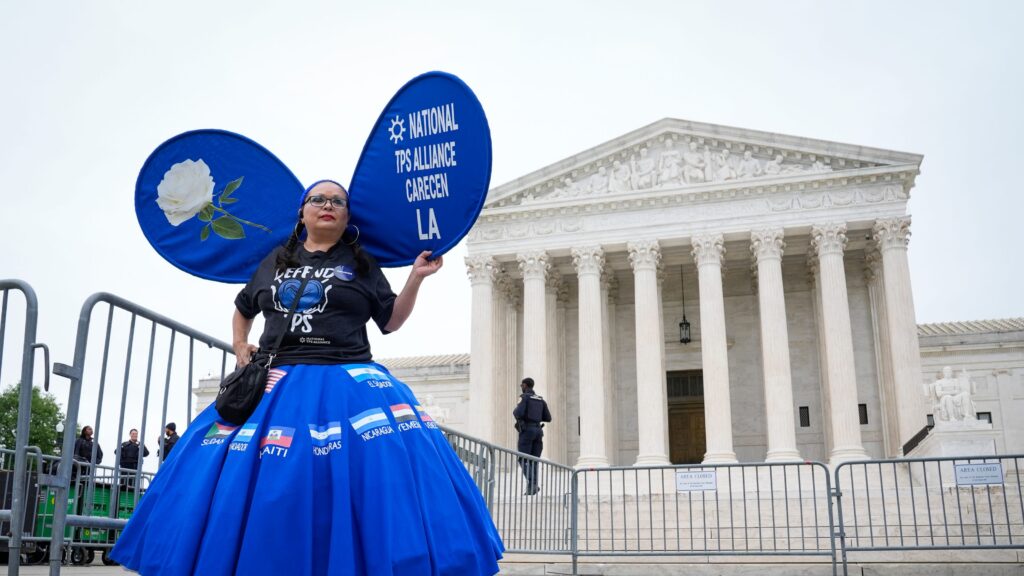
The Supreme Court ruled June 25 that President Donald Trump has the authority to immediately end deportation protections for Haitians and Syrians, handing the administration a broad victory in its push to dismantle a humanitarian program that has allowed hundreds of thousands of immigrants from dangerous nations to live and work in the United States temporarily.
The decision marks a pivotal moment in Trump’s hardline immigration agenda, which also includes a pending challenge to birthright citizenship still before the court. The case tested the limits of executive power and the deference courts traditionally grant presidents on immigration and foreign policy.
Lawyers representing roughly 350,000 Haitians and 6,000 Syrians sued to block the terminations, arguing the administration had already decided the fate of these groups without properly assessing whether conditions in their home countries had actually improved. The government countered that the law creating the Temporary Protected Status program explicitly bars judicial review of any determination about who can stay.
The Haitians’ case also raised allegations of racial bias. Trump has repeatedly denigrated Haitian immigrants, including falsely claiming they were eating pets in Ohio. During the 2024 campaign, he promised “large deportations in Springfield.”
“The true reason for the termination is the president’s racial animus towards non-white immigrants and bare dislike of Haitians in particular,” Geoffrey Pipoly, an attorney for the Haitians, told the justices in April.
Congress created the program in 1990, allowing the Homeland Security secretary to shield immigrants from deportation to countries plagued by war, natural disasters, or other crises. Protections last 18 months initially but are automatically renewed unless the government deems conditions safe enough for return.
Since Trump returned to office in 2025, his administration has moved to end protections for immigrants from most of the 17 countries previously deemed unsafe. Renewal deadlines for other nations, including Ukraine, are expected in the coming months. The court previously allowed the administration to lift protections for over 300,000 Venezuelans.
Immigrant advocates warn that ending the program entirely would represent the largest stripping of legal status in U.S. history. The administration argues the program has been abused and lost its temporary nature.
Haiti was first designated as too dangerous in 2010 after a devastating earthquake. The country remains under a state of emergency, with the State Department urging Americans not to travel there due to civil unrest, crime, and kidnapping risks. Syrians became eligible in 2012 amid civil war and repression under Bashar al-Assad. Both nations remain under the government’s highest travel warnings.
Last year, then-Homeland Security Secretary Kristi Noem determined that continuing protections for Haitians and Syrians was not in the national interest. The immigrants challenged that decision, and lower courts kept protections in place during litigation—a move the administration said overstepped.
The Justice Department argued the law bars judges from reviewing any part of the government’s decision-making process. “It’s almost like these district courts are appointing themselves junior varsity secretaries of state,” Solicitor General John Sauer told the court.
Lawyers for the immigrants countered that the law does not prevent courts from checking whether the government followed proper procedures. They claim Noem failed to adequately consult the State Department about conditions in Syria and Haiti and instead manufactured reasons to reach a predetermined outcome.
A Department of Homeland Security researcher complained in a 2025 email, later turned over to courts, that she was forced to make conclusions unsupported by evidence.
“What you have in the situation now is really stark incongruities between what DHS is saying and what the State Department is saying about these countries,” said Ahilan Arulanantham, a lawyer for the Syrians. “We think the statute requires them to actually find whether the country is safe to accept a return or not.”