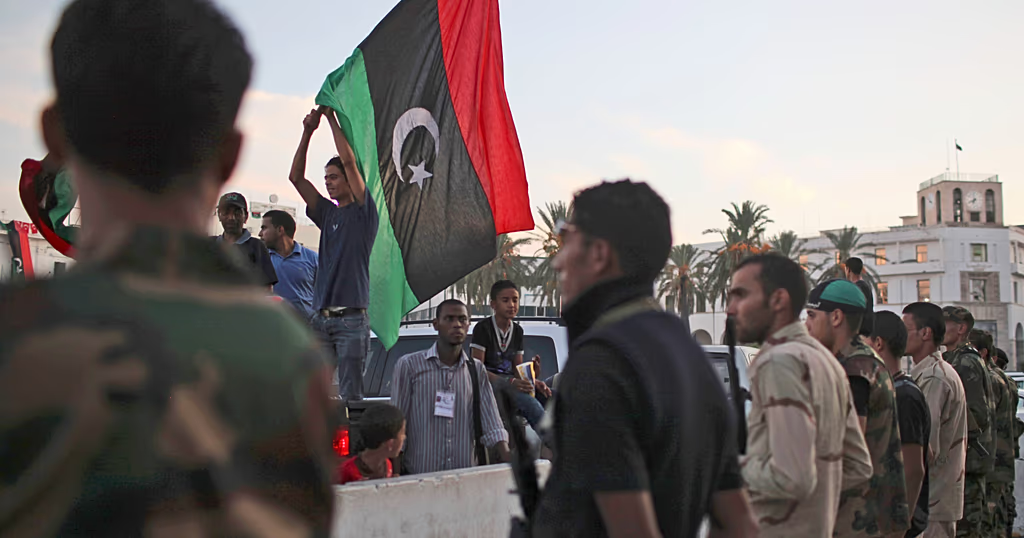
On Sunday, top military leaders from Libya’s rival armies met in Sirte to discuss ongoing efforts to reunify the military. Khaled Haftar, chief of staff of the eastern forces, and Salah al‑Din al‑Namroush, the western counterpart, were joined by representatives of the UN Support Mission in Libya. The eastern forces said the meeting was constructive, though no further details were released.
Libya has been split since the ouster of longtime leader Moammar Gadhafi in 2011. The country is now governed by two rival administrations: Abdulhamid Dbeibah’s internationally recognised Government of National Unity in the west, and Khalifa Haftar’s Government of National Stability in the east. The two sides began talks to reunify the country late last year after both requested Pakistan to mediate. The United States, Saudi Arabia, Qatar and Turkey have all expressed support for the process.
A draft plan that emerged from the talks would establish a 36‑month transitional power‑sharing arrangement. Under the proposal, Dbeibah would serve as prime minister while Haftar’s son, Saddam, would head a presidential council. The plan also grants Haftar’s faction budgetary authority, reflecting its control of Libya’s major oilfields and infrastructure.
The meeting in Sirte signals a potential breakthrough in a conflict that has cost thousands of lives and left the country’s Economy in disarray. Analysts say that the inclusion of the UN Support Mission and the backing of regional powers could help sustain momentum. However, critics warn that deep‑rooted mistrust and competing interests may still derail the process.
If the plan is adopted, it would mark the first step toward a unified national army and a more stable political environment. The next phase will involve detailed negotiations on the composition of the transitional council, the distribution of resources, and the integration of armed groups. The international community will likely monitor the proceedings closely, as Libya’s future remains a key concern for regional security and global energy markets.