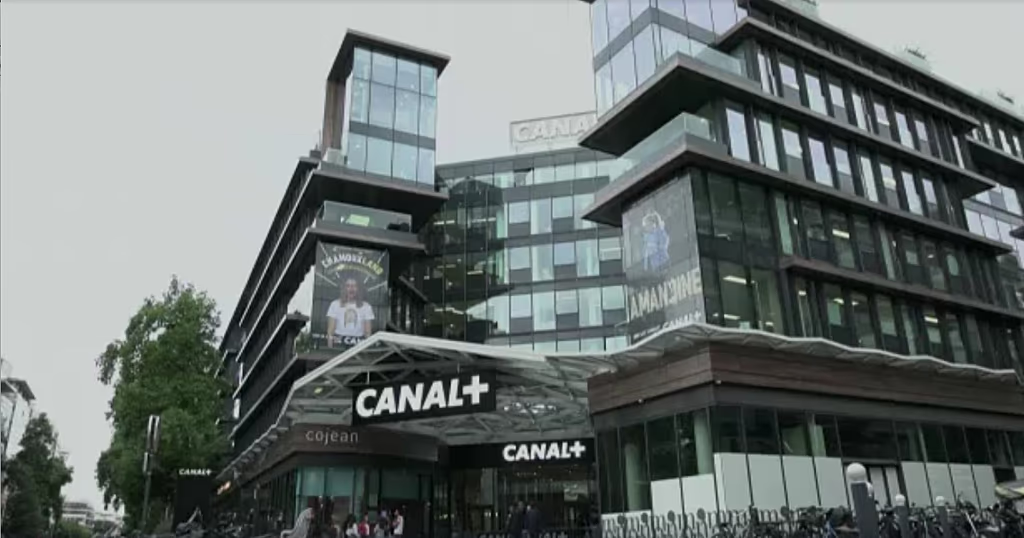
Burkina Faso’s media regulator has imposed a new, substantially larger fine on French satellite operator Canal+, citing the company’s failure to provide free access to the country’s state television channels. The watchdog said Canal+ had not complied with an order that requires the satellite service to make public stations freely available to all subscribers, even after their subscriptions expire. The penalty, set at $350,000, is four times higher than the fine issued in June.
When the earlier order was issued, Canal+ was given 30 days to remove all technical barriers that prevented subscribers from accessing unencrypted broadcasts of the state Radiodiffusion Télévision du Burkina. The regulator’s latest decision indicates that the company has not met that deadline.
The ruling comes amid a broader crackdown by Burkina Faso’s military government, which has been in power since a 2022 coup. The regime has suspended most major Western media outlets, including France’s RFI radio and France 24 television channel, and has expelled several foreign correspondents. Critics say the government is tightening control over the media and has been particularly harsh on dissent, especially criticism of its handling of jihadist violence that has plagued the country for a decade.
The fine reflects the regulator’s insistence that state television remain accessible to the public without cost, a policy that the military government has defended as essential for national cohesion. Canal+, a major player in the region’s satellite market, has faced increasing scrutiny over its compliance with local broadcasting regulations.
The decision underscores the tension between Burkina Faso’s authorities and foreign media operators. While the government maintains that it is safeguarding national security and public order, international observers warn that such measures could further erode press freedom and limit the flow of information into the country.
For Canal+, the $350,000 penalty and the ongoing regulatory pressure may prompt a reassessment of its service offerings in Burkina Faso. The company will need to decide whether to comply with the regulator’s demands or seek alternative arrangements to continue serving the country’s satellite audience.
The situation remains fluid. The military government’s stance on media access and the regulator’s enforcement of broadcasting rules will likely shape the future of information dissemination in Burkina Faso. As the country navigates its security challenges, the balance between state control and media freedom will continue to be a focal point for both domestic stakeholders and the international community.