Former Malian Prime Minister Moussa Mara was released from prison on Saturday, 1 August after serving a one‑year sentence for publicly supporting detained opposition politicians on social media. His return was greeted with cheers from relatives, political figures and supporters who gathered at his family home in Bamako’s Commune 4 district.
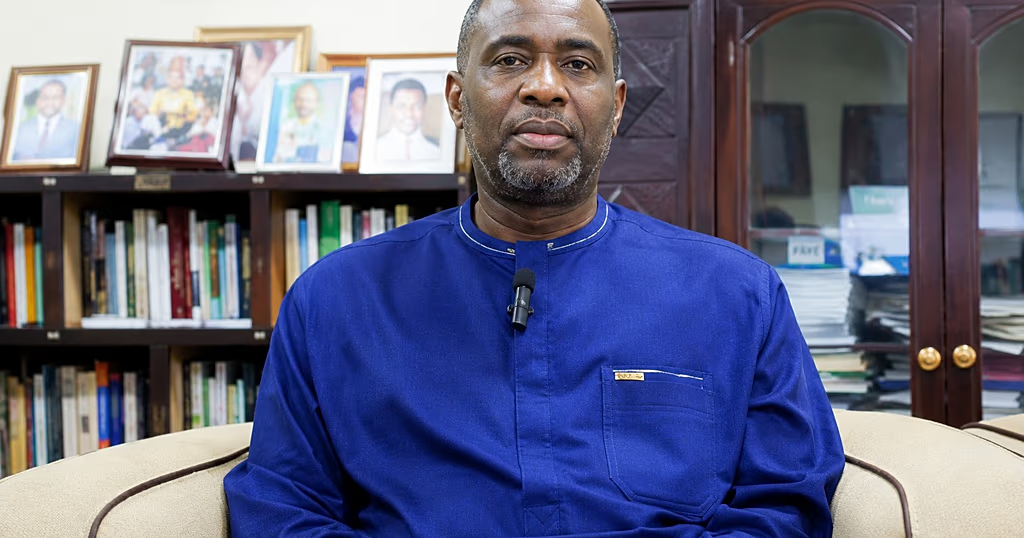
A day after his release, Mara posted a video on Facebook in which he called for national unity and reconciliation. “I pray to the Lord to grant us more humanity and more empathy towards one another, so that we can achieve true unity and genuine reconciliation,” he said. He added that truth was essential to rebuilding the country, concluding with the words, “I forgive, and forgive me.”
In the same address, Mara expressed concern for his lawyer and fellow politician Me Mountaga Tall, who has not been seen since he was abducted from his home by armed, masked men in early May. The disappearance underscores ongoing worries about enforced disappearances and the broader political climate in Mali.
Neither Mara nor his supporters have indicated whether he intends to resume an active political role after his release. His future remains uncertain, especially in light of the ruling military junta’s decision to dissolve all political parties and organisations on 13 May 2025, a move that has significantly restricted political activity across the country.
Mara’s appeal for unity comes at a time when Mali’s political landscape is fragile. The junta’s crackdown on political parties, coupled with the disappearance of key political figures, raises serious concerns about human rights and democratic governance. As Mali navigates this uncertain period, the international community watches closely to see whether the country can move toward genuine reconciliation and a stable political future.