The Independent National Electoral Commission (INEC) has declared Governor Ademola Adeleke winner of the Osun State governorship election, yet the credibility of the electronic transmission process remains under scrutiny following pointed questions from prominent economist and investor Atedo Peterside.
INEC announced Adeleke, the Accord Party candidate, secured a second term with 511,067 votes, defeating All Progressives Congress (APC) candidate Bola Oyebamiji, who polled 444,815 votes. Adeleke won in 19 of the state’s 30 local government areas. Voter turnout was reported at 43.4 percent, a figure observers noted as relatively high by recent Nigerian standards.
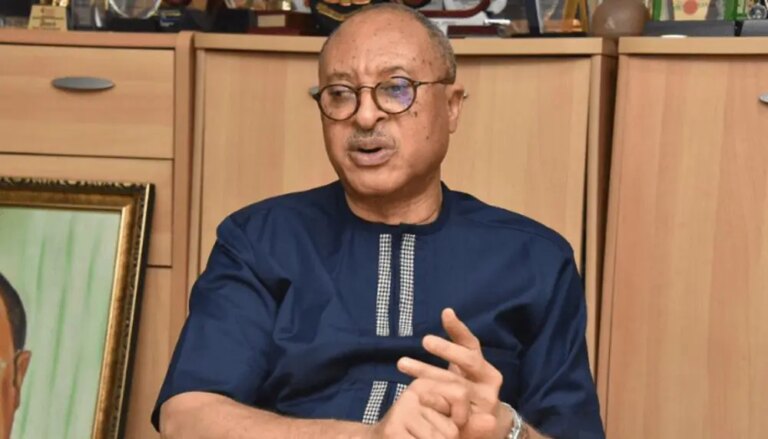
However, attention quickly shifted to the performance of INEC’s Results Viewing Portal (IReV). On election night, Peterside highlighted a significant slowdown in uploads. He noted that results from 3,292 polling units, representing 87.48 percent of the total, had been uploaded, but the process appeared to stall with 471 units outstanding well past 10 p.m.
Writing on the development, Peterside questioned why the final batch of results was taking considerably longer to appear on the portal than the initial tranche. He specifically asked INEC to explain why collating the last 13 percent of results took longer than the first 87 percent, and whether a technical glitch was responsible for the delay.
INEC subsequently resumed uploads. By approximately 2 a.m. the following day, Peterside acknowledged that results from 3,612 polling units, covering roughly 95.99 percent, had been published. Despite the progress, he maintained concern over the pace of the final phase and the lack of immediate explanation from the electoral body.
The intervention draws a direct comparison to the 2022 Osun governorship election, which Peterside has previously cited as a benchmark for transparency. During that contest, all 3,763 polling unit results were eventually uploaded to IReV, allowing observers and the public to track the outcome in near real-time.
For Peterside, the issue extends beyond the declaration of a winner. He argues that public confidence in the electronic results management system hinges on the process being sufficiently transparent and verifiable at every stage. The Osun election was widely viewed as a critical test of INEC’s operational readiness ahead of the 2027 general Elections.
Stakeholders monitoring Nigeria’s electoral reforms are now awaiting a formal explanation from INEC regarding the cause of the upload slowdown. The commission’s response will likely influence preparations for the next general election cycle, as the reliability of IReV remains central to the integrity of Nigeria’s evolving electoral framework.