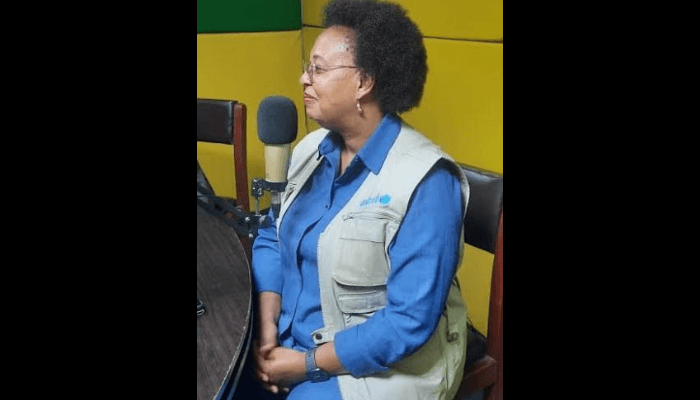
Lymmy Ogbidi is the Reservoir Engineering Solutions Technical Lead at SLB, Crawley UK. In this interview, Ogbidi emphasises the need for budding and young engineers aiming to get a master’s degree to engage deeply with the global community and faculty expertise to broaden their perspective. Excerpts by JOHN SALAU:
What’s your take on Nigeria’s oil and gas sector?
Nigeria’s oil and gas sector is going through an interesting transformation. We have enormous resources, a strong domestic market and growing indigenous capacity. With the indigenous companies acquiring major assets previously operated by international oil companies and Dangote Refinery significantly expanding local refining capacity, we are seeing more of the industry’s value chain coming under local participation. I believe the opportunity now is to build on that momentum by increasing production, developing our vast gas resources, improving infrastructure and applying technology to make operations more efficient and sustainable. If we get the investment climate and policies right, I believe Nigeria can move beyond being predominantly a crude producer to becoming a much stronger integrated energy and industrial Economy.
The private refinery (Dangote) plans to go public with an initial IPO in October; what does that mean for the oil and gas sector?
It would be a very significant development for Nigeria’s oil and gas sector. Taking a refinery of that scale public opens the opportunity for broader participation in what is one of the country’s most important energy assets. Beyond raising capital, an IPO can bring greater transparency, stronger corporate governance and market discipline. It also sends a positive signal to both local and international investors about the growing maturity of Nigeria’s energy sector. More importantly, I believe it reinforces the shift we are already seeing towards greater private-sector and indigenous participation across the industry. If successful, it could encourage more energy companies to access the capital market and ultimately deepen investment across Nigeria’s entire energy value chain.
What would you say inspired you to pursue an MSc in Petroleum Engineering and how did your academic interests develop leading up to this decision?
My decision to pursue an MSc in Petroleum Engineering at Heriot-Watt was driven by two key factors: a passion for the energy industry and a desire to deepen my technical expertise in reservoir engineering. Before this, I had developed a good foundation in engineering during my bachelor’s degree and worked on projects that highlighted the complexity of subsurface challenges. I realized that advanced skills in reservoir simulation, enhanced oil recovery, and production optimization were critical for solving real-world problems, especially in regions like West Africa where efficiency and sustainability are key. Heriot-Watt stood out for its industry-focused curriculum and strong research reputation, which aligned perfectly with my goal of bridging theory and practical application. Ultimately, this decision was about positioning myself to lead innovation in an industry that’s evolving rapidly with advanced technology.
During your time at Heriot-Watt, what experience would you describe as pivotal that shaped your approach to reservoir engineering and problem-solving within the oil and gas industry?
One pivotal moment at Heriot-Watt was during a group project on reservoir simulation for a complex North Sea offshore field. We had limited data and conflicting interpretations to quantify the asset, which forced us to think beyond textbook solutions. I led the team during the initial phase of the project, stepping into the role of geological subsurface modeller ahead of my core reservoir engineering responsibilities. In this capacity, I applied probabilistic modelling and sensitivity analysis to quantify subsurface uncertainty while incorporating economic considerations into key technical decisions. This experience shaped my approach to reservoir engineering by combining rigorous data analysis with practical business judgment and collaborative problem-solving. It taught me that in real-world scenarios, adaptability and clear communication are just as critical as technical expertise.
How did your MSc research contribute to your expertise and understanding of the industry’s evolving needs?
My MSc research focused on subsurface injection of Monoethylene Glycol (MEG) for underground gas storage in depleted reservoirs. This work gave me deep insight into flow assurance, hydrate prevention, and chemical interactions under high-pressure conditions which is critical for safe and efficient gas storage. It shaped my understanding of how reservoir engineering must evolve to support energy transition goals, such as seasonal gas storage and carbon capture. I learned to integrate thermodynamic modeling with operational constraints, which strengthened my ability to design solutions that balance technical feasibility, safety, and economics. Ultimately, this research reinforced the importance of innovation and adaptability in meeting the industry’s future needs.
In what ways has your educational training supported your industry practice?
My education at Heriot-Watt differentiated me because of its strong integration of theory, practical application, and cutting-edge research. The program emphasized advanced reservoir simulation, flow assurance, and energy transition strategies, which gave me a holistic view of subsurface challenges. Unlike many traditional programs, Heriot-Watt’s industry-focused curriculum and exposure to real-world case studies taught me to combine technical rigor with business judgment and sustainability considerations. This approach shaped me into not just a technical expert, but a strategic thinker who can lead innovation and adapt to evolving industry needs—skills that set me apart as an emerging leader in reservoir engineering. The rigorous curriculum at Heriot-Watt prepared me exceptionally well for the technical challenges I have faced over 15 years in the industry. Working with industry-standard reservoir engineering software like ECLIPSE and Petrel, and analysing real field data, taught me how to handle complex reservoir simulations and uncertainty modelling under real-world conditions. This hands-on exposure built my confidence in integrating theory with practice—whether optimizing production strategies, designing EOR projects, or managing…
[Article text ends abruptly in source material]