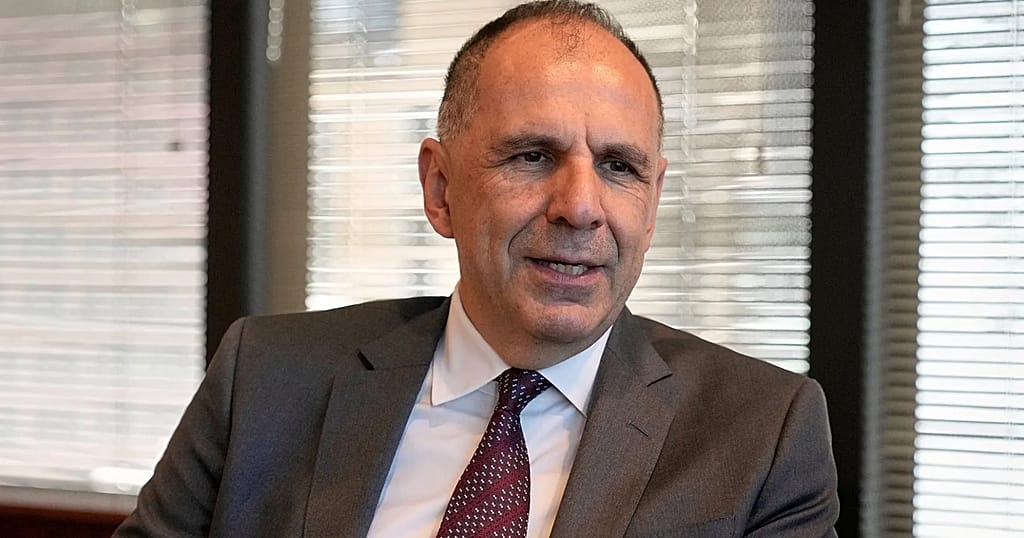
Greek Foreign Minister Giorgos Gerapetritis arrived in Tripoli on Monday for high‑level talks with his Libyan counterpart, Minister of Foreign Affairs Taher al‑Baour, marking a renewed diplomatic push on migration, security and economic cooperation. The first item on the agenda was the sharp increase in migrants travelling from eastern Libya to Greece, a trend Athens says requires stronger Libyan control. Both ministers underscored the necessity of a “comprehensive approach” that combines burden‑sharing, enhanced security measures and joint training programmes for border and coast‑guard personnel, according to statements from Libyan officials.
In addition to migration, the dialogue covered the expansion of cooperation in strategic sectors such as energy, infrastructure and maritime transport. Al‑Baour told reporters that the meeting “addressed numerous aspects of economic cooperation between our two countries” and that both sides “agreed to exchange visits between Greek and Libyan business representatives to create a sustainable partnership, enabling private‑sector actors to engage directly in mutual cooperation.”
Following the bilateral session, Gerapetritis met with Abdulhamid Dbeibah, head of Libya’s internationally recognised national unity government. The encounter took place against the backdrop of a longstanding dispute over the delimitation of maritime borders in the energy‑rich waters south of Crete. Both governments reaffirmed their commitment to continue constructive dialogue on the issue, emphasizing adherence to international law.
The talks come as the European Union intensifies efforts to curb irregular migration across the Mediterranean, while Libya seeks to stabilise its own security situation amid ongoing political fragmentation. Greece has repeatedly called on Tripoli to boost its capacity to intercept vessels departing from Libyan ports, a demand that aligns with broader EU‑wide migration management strategies.
Observers note that the willingness to discuss joint business missions could signal a shift toward deeper economic interdependence, potentially leveraging Libya’s offshore hydrocarbon projects and Greece’s logistical expertise. However, the success of such initiatives will depend on sustained security cooperation and progress in resolving the maritime boundary disagreement.
The meetings concluded with an agreement to maintain regular diplomatic channels and to organise follow‑up visits for business delegations. The outcomes are expected to influence both countries’ migration policies and shape future collaboration in the Eastern Mediterranean region.