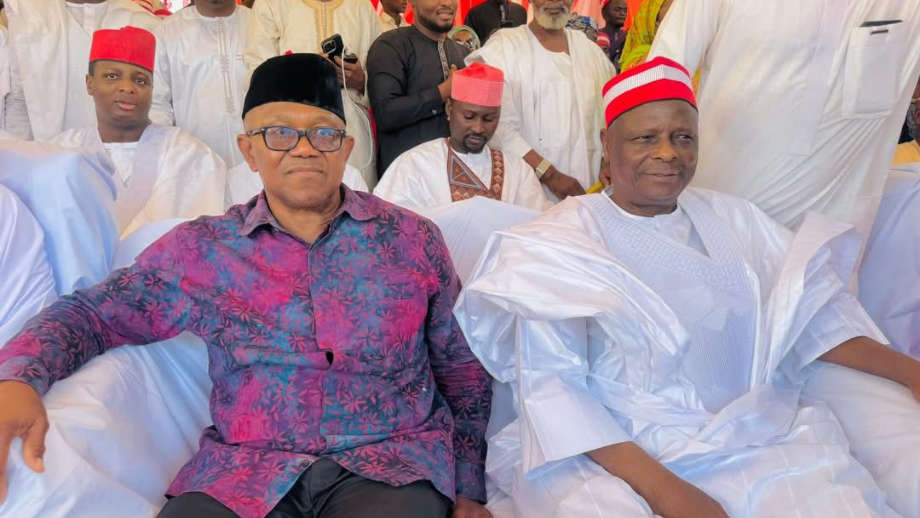
Former Kano governor Rabiu Musa Kwankwaso shared insights during an interview with ARISE News on Monday, revealing that his daughter encouraged him to join the campaign of former Labour Party presidential candidate Peter Obi during the 2023 general elections. This anecdote illustrates a significant shift among Nigeria’s younger voters, who are increasingly prioritizing leadership competence and good governance over ethnic and religious affiliations. Speaking from Abuja, Kwankwaso emphasized that the appeal of Peter Obi extends beyond his political platform, resonating with a new generation that seeks effective leadership for the country.
Kwankwaso noted that his daughter’s suggestion to collaborate with Obi highlights a generational divide in political preferences between young Nigerians and their parents. He pointed out a disconnect between current leaders and the youth, stating, “You have leaders who hardly have any contact with the young men and women.” Many politicians, according to Kwankwaso, continue to frame elections through the lens of ethnicity and religion, a strategy that no longer aligns with the priorities of a youth-driven electorate that is more engaged with social media and online discourse.
His comments come at a time when evidence suggests that Nigeria’s demographic dividend is influencing political dynamics. Surveys conducted after the 2023 elections revealed that a substantial number of voters under 35 prioritize “accountability,” “economic development,” and “security” over communal identities when making electoral decisions. Analysts have noted that the rise in internet penetration and the proliferation of digital platforms have empowered youth voices, enabling them to organize, share information, and challenge traditional patronage networks.
However, Kwankwaso cautioned that many political elites have been slow to adapt to these changes. He argued that failing to engage meaningfully with young Nigerians risks alienating a demographic that could significantly influence future election outcomes. “People are talking of religion. Some people are talking of ethnicity, but the younger people are looking for credible leadership capable of addressing the country’s challenges,” he stated.
Kwankwaso’s remarks also reflect a broader narrative surrounding the 2023 election, during which Peter Obi, a former governor of Anambra State, garnered a notable share of the youth vote, particularly in the South-East and South-West regions. Although Obi ultimately finished third, his campaign underscored the growing strength of a generation that is less inclined to accept identity-based politics. Having served as Kano State governor from 1999 to 2003 and again from 2011 to 2015, Kwankwaso has previously expressed openness to cross-party collaborations aimed at bridging ethnic and regional divides.
His acknowledgment of his daughter’s influence signifies a personal recognition of the changing political landscape and may indicate a shift among established politicians to engage younger voters as the 2027 elections approach. As Nigeria prepares for this electoral cycle, the pressure on political parties to develop policies that resonate with a digitally connected youth demographic is likely to increase. Kwankwaso’s interview highlights a pivotal moment: the ability of senior leaders to recalibrate their outreach and messaging could determine their relevance in a rapidly evolving political environment.