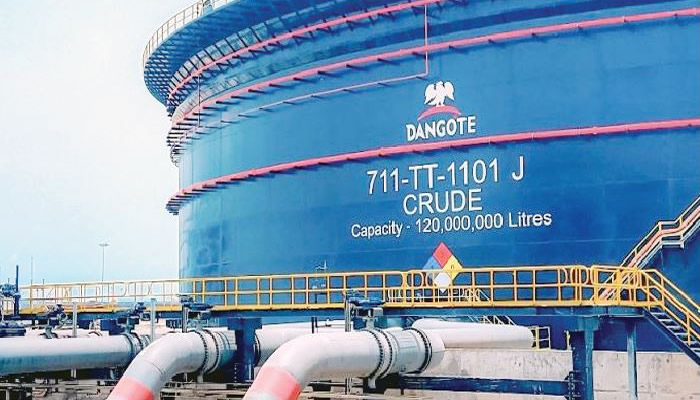
Aliko Dangote, the head of Nigeria’s Dangote Group, said the company’s new 700,000‑barrel‑per‑day refinery could deliver 10 percent of the country’s $1 trillion Economy target set by President Bola Ahmed Tinubu for 2030. The statement was made during a visit by Minister of State for Industry Senator John Owan Eno, who was touring the refinery on Wednesday.
The refinery, which is the largest of its kind in Africa, is a flagship project for Dangote Group and is expected to boost domestic production of refined petroleum products. In an interview with journalists, Dangote explained that the refinery’s output would help Nigeria meet its economic ambitions. “President Tinubu’s target of achieving a $1 trillion economy by 2030 is achievable. That is why we took out of that vision of a $1 trillion economy so that we can contribute $100 billion, which is 10 percent,” he said.
Earlier in the day, Senator Enoh echoed the sentiment, noting that the refinery is vital to realizing the nation’s $1 trillion goal. He highlighted the project’s role in reducing import dependence and creating jobs, underscoring the government’s commitment to industrial development.
The refinery’s contribution of $100 billion represents a significant portion of the projected economic growth. By adding local refining capacity, the project is expected to lower the cost of petroleum products, improve supply security, and generate revenue for the federal budget. The investment also aligns with President Tinubu’s broader strategy to diversify Nigeria’s economy beyond oil and gas.
Dangote’s remarks come at a time when Nigeria is intensifying efforts to attract foreign investment and strengthen its industrial base. The refinery’s scale and output capacity are seen as a catalyst for further development in the energy sector and related industries.
As the refinery moves closer to full operation, stakeholders will monitor its impact on the national economy and its ability to meet the ambitious $1 trillion target. The project’s success could set a precedent for large‑scale industrial ventures in the region, potentially reshaping Nigeria’s economic landscape in the coming decade.