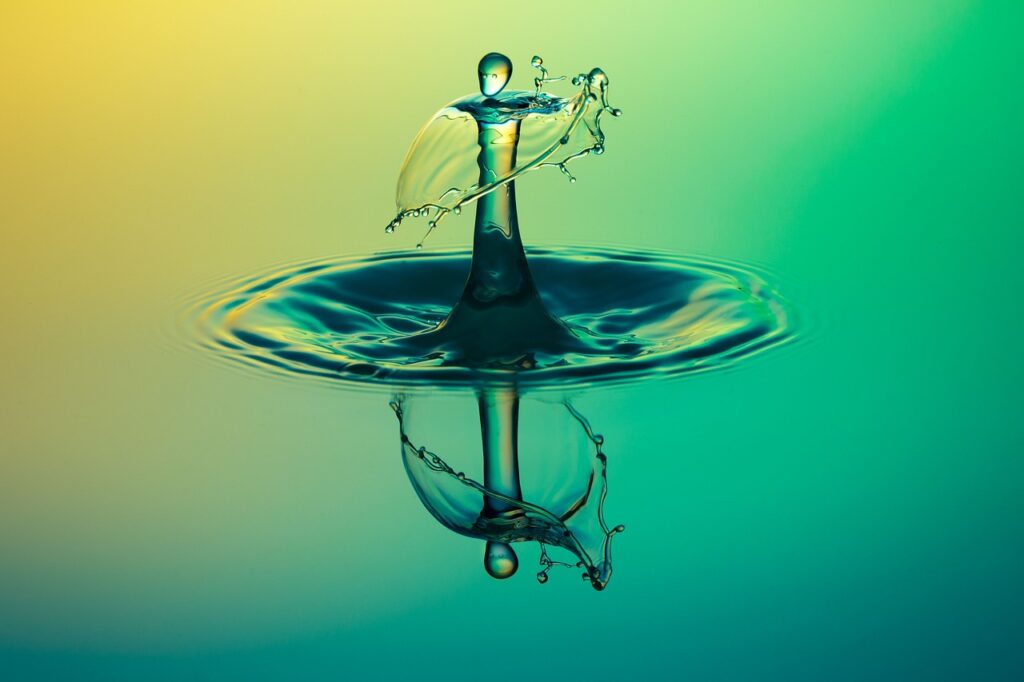
Look closely at almost anything—a drop of water on a windshield, the rust creeping across a metal gate, or the way a drug dissolves in your bloodstream—and you will find a story playing out at a boundary no thicker than a few atoms. This is the domain of surface chemistry, a discipline that examines what happens where materials meet. It is a world of invisible forces, where molecules cling, release, and rearrange in ways that define everything from industrial efficiency to the biology of life itself.
At its heart, surface chemistry is about the edge of things. That edge, or interface, might separate a solid from a gas, a liquid from a solid, or a gas from a liquid. What makes these boundaries so intriguing is that they behave nothing like the material beneath them. Inside a solid, atoms sit in a balanced, orderly arrangement, their forces canceling out. But at the surface, that balance is broken. Atoms are left exposed, their bonds dangling, creating a zone of heightened energy and reactivity. This disruption gives rise to unique surface species—molecules that exist only at the interface and display quirks you would never find in the bulk.
Take adsorption, the process by which molecules stick to a surface. It is not merely a passive coating; it is a dynamic interaction driven by the attraction between the surface and the arriving molecules. These molecules form a thin, sometimes single-layer film that can alter the surface’s behavior entirely. The reverse, desorption, is just as important—when molecules let go, they can trigger reactions or release materials. Together, adsorption and desorption are the engines behind catalysis, the process that accelerates chemical reactions. A catalyst’s surface acts as a stage, pulling reactant molecules into close contact and lowering the energy barrier for the reaction. Without this, countless industrial processes—from refining fuel to producing fertilizers—would grind to a halt.
Another key idea is surface energy, a measure of the extra energy locked into a surface because of those unbalanced forces. This energy is why liquids form droplets and why a needle can float on water. Surface tension, a cousin of surface energy, gives liquids that deceptive “elastic skin” at their edges, a phenomenon that affects everything from inkjet printing to the behavior of bubbles in a glass of champagne.
The implications stretch far beyond the laboratory. In materials science, engineers manipulate surface chemistry to design coatings that resist corrosion, fabrics that repel water, or batteries that charge faster. In biology, the surfaces of cells and proteins govern how they interact—whether they stick together, fold correctly, or trigger immune responses. Even in environmental science, surface chemistry explains how pollutants cling to soil particles or how nanoparticles can scrub contaminants from groundwater, offering new paths for cleanup.
Consider the humble catalyst again. In a car’s catalytic converter, precious metals like platinum provide a surface where toxic gases like carbon monoxide and nitrogen oxides are transformed into harmless substances. The efficiency of that transformation hinges entirely on the surface’s atomic arrangement. Tweak the surface—add a second metal, alter its structure—and you can dramatically improve performance or reduce cost. This is why surface chemists spend careers fine-tuning these interfaces, chasing reactions that are faster, cleaner, and more selective.
What makes surface chemistry so compelling is that it sits at the crossroads of physics, chemistry, and engineering. It explains why ice is slippery, why glue sticks, and why some medicines work better than others. It is the science of the overlooked, the thin line where the mundane meets the extraordinary. As researchers push further, using advanced tools to watch single atoms move across surfaces in real time, the field is yielding discoveries that could redefine energy storage, environmental protection, and even medicine.
The next time you see a morning mist settle on a leaf or notice how a drop of oil spreads on water, remember: you are witnessing surface chemistry in action. It is a quiet, intricate force, but one that shapes our world in ways both profound and practical. Understanding it is not just an academic exercise—it is a key to unlocking innovations that could change how we live, build, and heal.