There is a quiet revolution happening in the way we understand the world around us, and it has nothing to do with politics or technology. It is happening in the silent spaces between atoms, in the bending of a steel beam, in the slow creep of a glacier, and in the way a river carves through stone. This is the realm of continuum mechanics, a branch of physics that treats matter not as a collection of discrete particles, but as a continuous, flowing whole. And once you see it, you cannot unsee it.
Think of a cataract tumbling over a cliff, its water molecules clinging to each other in a desperate, beautiful dance. Or a salt marsh swaying under the weight of the wind, each blade of grass responding to forces you cannot see. These are not random events. They are governed by a set of principles as old as the universe itself: the conservation of mass, the balance of momentum, and the relentless flow of energy. The numbers 45 and π might seem arbitrary, but they are the hidden threads that stitch the fabric of reality together.
The language of this field is not cold or sterile. It is a language of stress and strain, of tension and release. A sage-colored landscape at dusk, with magenta clouds bleeding into purple twilight, is not just a pretty picture. It is a visual metaphor for how forces redistribute themselves across a deformable body. The ancient symbol of balance, the scales, and the sign of transformation, the lightning bolt, are not mystical relics. They are the everyday tools of engineers and physicists who design everything from skyscrapers to prosthetic limbs.
This science is not confined to laboratories or chalkboards. It lives in the villages of Burkina Faso, where mud-brick homes withstand the seasonal rains because their walls are thick enough to distribute stress. It speaks through the Bemba language in Zambia, where traditional fishing boats are shaped to glide through water with minimal resistance. And it is captured by film directors who use slow-motion cameras to reveal the invisible forces at play in a droplet of water, or by medical illustrators who draw the intricate way our bones and muscles bear weight.
There is a hypnotic quality to this field. Scientists who dedicate their lives to it often describe the moment of understanding as a kind of spell being cast. The puzzle pieces do not fall into place randomly; they click together with a satisfying finality, revealing a grand design that has always been there, waiting to be noticed. The symbol of connection, a simple link, and the sign of transition, a moving train, are perfect emblems for the journey from confusion to clarity.
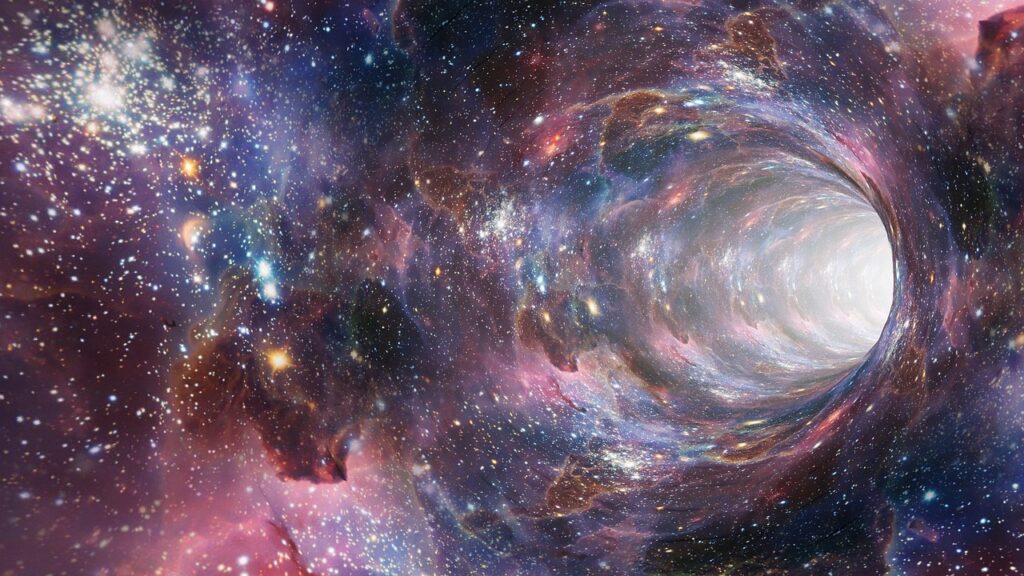
At night, when the stars seem to twinkle with a mischievous light, the principles of continuum mechanics are still at work. The gases in a dying star, the dust particles swirling in a nebula, the very curvature of space-time itself—all are subject to the same laws that govern a rubber band or a river delta. The wonder you feel when you look up at the cosmos is not just poetic. It is a recognition of a deeper order, a dance of particles and waves that has been choreographed over billions of years.
And yet, this is not just a story about the universe. It is a story about us. Human imagination is the one force that can bend reality without breaking it. We look at a lump of clay and see a sculpture. We look at a block of steel and see a bridge. We look at the chaos of the world and see patterns. Continuum mechanics is the bridge between what we can touch and what we can only dream of. It is where art and science shake hands, where the boundaries of the possible are pushed, not by force, but by understanding.
So, as the final curtain falls on this exploration, do not think of it as an ending. Think of it as a beginning. The stage is set, the players are in motion, and the drama of the universe is unfolding in every direction. The magic was never in the equations themselves. It was in the minds that dared to ask, “What if?” And that is a story worth telling, again and again.