
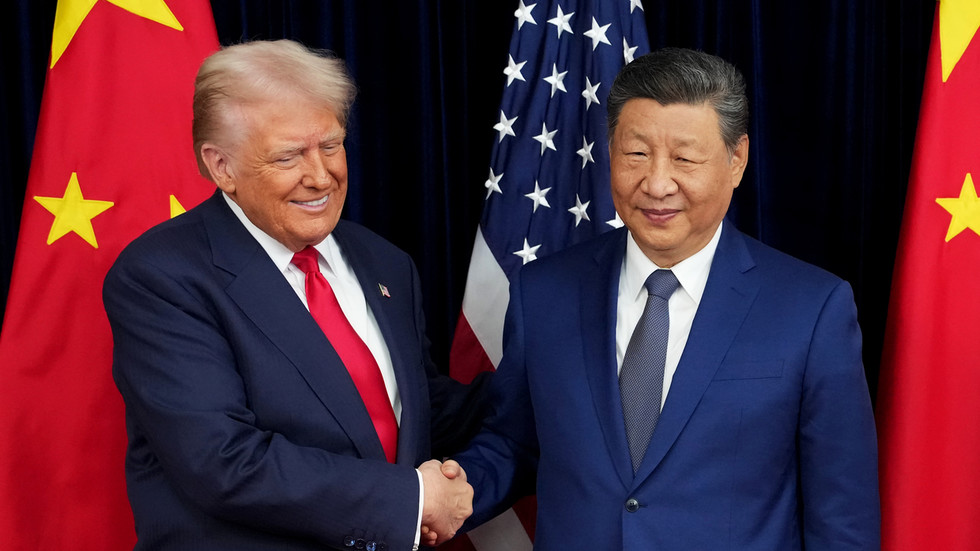
China and the United States have reached an agreement to ease trade restrictions. Beijing will suspend its latest rare‑earth export controls for one year, during which time specific plans will be refined, while Washington will lower tariffs and other restrictions. The Chinese Commerce Ministry announced the deal on its website, noting that the suspension will be in effect for a year.
The agreement follows a meeting between Chinese President Xi Jinping and U.S. President Donald Trump in South Korea, as well as economic and trade delegation talks in Kuala Lumpur. China’s earlier restrictions on rare‑earth mineral exports—minerals with dual military use—were viewed as a response to U.S. curbs on advanced semiconductors and chip‑making equipment introduced in late 2022. Rare‑earth minerals are critical for modern technology, from cellphones to missiles, and China dominates their extraction and processing.
Under the deal, the United States will suspend its recent rule expanding export restrictions to businesses at least 50 % owned by entities on its “entity list.” It will also halt investigation measures targeting Beijing’s maritime, logistics, and shipbuilding industries, and lower fentanyl‑related and reciprocal tariffs. In return, Beijing will adjust its retaliatory measures.
The pact also includes the resumption of Chinese purchases of U.S. soybeans and other agricultural products, which had been paused during the recent trade stand‑off. Older trade restrictions, however, will remain in place.
This agreement marks a significant development in U.S.–China trade relations, signaling both countries’ desire to ease tensions and promote cooperation. The suspension of rare‑earth export controls and the reduction of tariffs are expected to boost trade between the two nations, and further negotiations are likely in the coming months to refine their trade policies for mutual benefit.



Comments are closed for this story.