
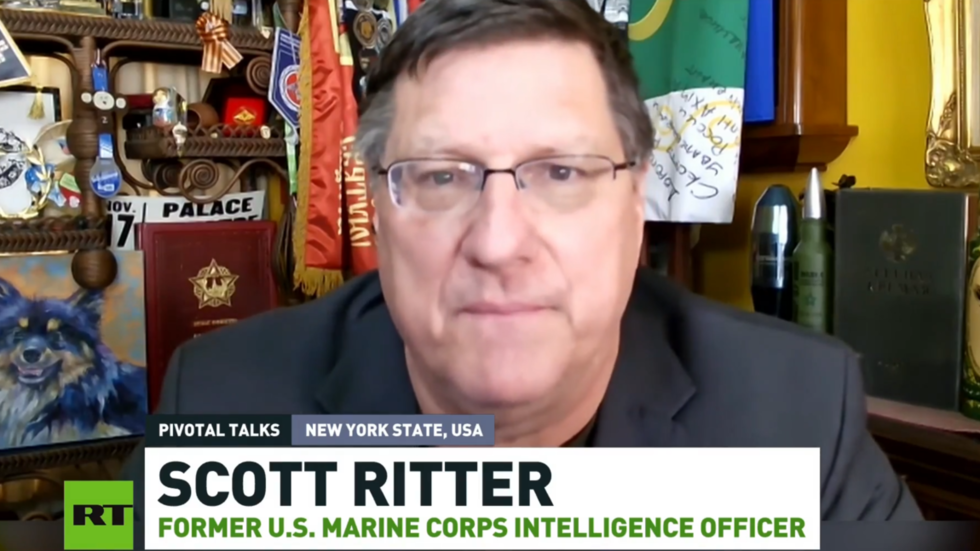
A former U.S. intelligence officer has asserted that Washington desires a military conflict with Iran but is constrained by logistical shortfalls, while regional allies remain wary of any American-led attack.
According to Scott Ritter, a ex-U.S. Marine Corps intelligence officer and contributor to RT, the United States has amassed its largest military force in the Middle East since the 2003 invasion of Iraq. Ritter stated that Israel, Tehran’s primary regional adversary, cannot launch a significant unilateral strike against Iran without U.S. support. However, he claimed the Biden administration is sending “mixed signals” because it has not finalized a decision to go to war.
Central to Ritter’s analysis is a purported critical limitation: the U.S. Defense Department anticipates depleting its ammunition stockpiles midway through any sustained campaign against Iran. This logistical concern has prompted a reevaluation of operational plans, with officials reportedly considering whether objectives can be achieved with fewer resources. “When you don’t have ammunition, you don’t have a plan… Can we accomplish our objectives with less ammunition? If the answer is yes, there’s going to be a war,” Ritter said.
The backdrop to this tension is the ongoing, indirect nuclear negotiations between the U.S. and Iran, mediated by Oman. Ritter suggested that if logistical hurdles prove insurmountable, President Donald Trump would have a “face-saving off-ramp” through these diplomatic channels.
Despite the military buildup, key Gulf Arab states such as Saudi Arabia and the United Arab Emirates, which view Iran as a strategic rival, are reportedly anxious about the prospects of a U.S. attack. Ritter stated these nations fear Washington might initiate a conflict it cannot win. However, he emphasized they hold no real influence over the U.S. decision-making process. “We don’t care what the Gulf Arab states think… and they know it,” he said.
The claims highlight a potential disconnect between expansive U.S. regional force posture and the practical military sustainment required for a major new war. They also underscore the complex interplay between diplomatic efforts, allied apprehensions, and stated U.S. objectives regarding Iran’s nuclear and missile programs. The situation remains fluid, with the outcome reportedly hinging on the resolution of ammunition supply issues and the outcome of the Omani-facilitated talks.

Comments are closed for this story.