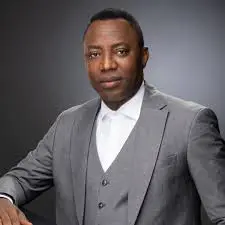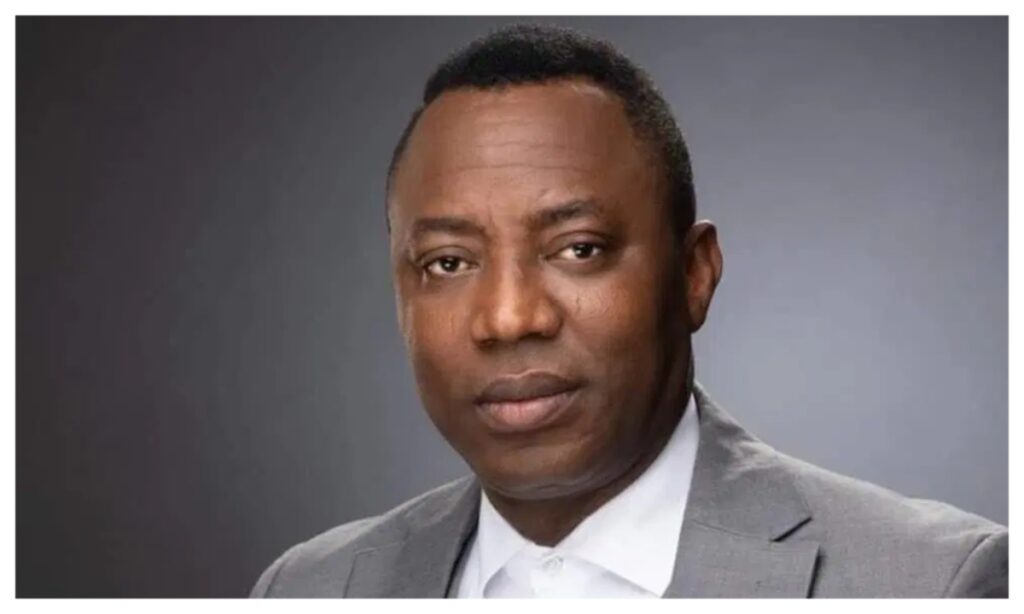
Activist Omoyele Sowore has called on the Nigeria Police Force to stop functioning as a private security arm for the country’s wealthy and high‑profile individuals, and urged the judiciary to cease issuing severe punishments for online speech.
The statement, posted on X, references a 2012 tweet by popular singer Adekunle Gold that criticised former President Goodluck Jonathan. The tweet, which read “Dear God, if you give us Dagrin back, we will give you Jonathan in return. Lol,” was widely regarded at the time as an exercise of free expression. Sowore noted that, had Gold been arrested for the post, supporters would have taken to the streets demanding his release.
Sowore questioned how an artist who once benefitted from unrestricted speech could later “use the police, courts, and the brutal cyber‑crime framework against ordinary Nigerians over online banter and social media exchanges.” He emphasized that freedom of expression should be universal, applying equally to celebrities, politicians, activists and ordinary citizens.
“The Nigeria Police Force @PoliceNG must stop acting as a private army for the rich and famous, while the judiciary must stop handing down outrageous punishments over internet speech that should never be criminal matters in the first place,” Sowore wrote.
The activist’s remarks come amid growing concern over the use of Nigeria’s cyber‑crime law and other statutes to prosecute social‑media users for comments deemed defamatory or inflammatory. Human‑rights groups have warned that such practices risk stifling public discourse and eroding democratic space.
Nigeria’s law‑enforcement agencies have previously defended their actions, stating that the police are obligated to enforce existing legislation, including provisions targeting cyber‑crimes and defamation. Critics argue that the enforcement has become selective, often targeting dissenting voices while shielding influential figures.
Sowore’s appeal highlights a broader debate about the balance between regulating harmful online content and protecting constitutional rights. As digital platforms continue to shape political conversation across Africa, the outcome of this discourse could set precedents for how internet speech is treated in courts and by security agencies.
The next steps may involve legal challenges to recent convictions under the cyber‑crime act, as well as possible parliamentary review of the law’s scope. Observers will be watching for any official response from the police leadership or the judiciary regarding Sowore’s demands.