There is a quiet magic in the way a river bends, in the slow surrender of a clay pot under a potter’s hands, in the groan of a steel bridge as it bears the weight of a thousand passing lives. This is the world of continuum mechanics—not a sterile collection of equations, but a living, breathing narrative written in the language of stress and strain. It is the science of how matter yields, flows, and remembers, and it is far more poetic than any textbook would dare admit.
Picture a landscape shaped by invisible hands: cataracts tumbling over ancient rock, salt marshes swaying with the tide, karst towers rising like monuments to time, and geysers bursting with the rhythm of a heartbeat. In this terrain, the elephant’s heavy tread and the lynx’s silent stalk are not just acts of survival—they are performances of physics, choreographed by the conservation of mass, momentum, and energy. Even the number 45 and the constant π appear as quiet characters in this drama, weaving order into apparent chaos.
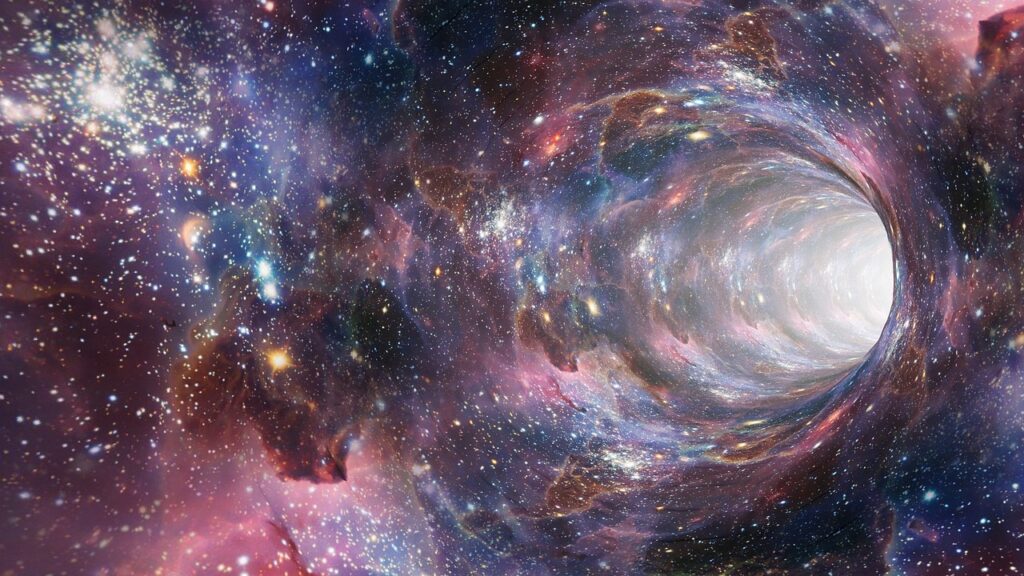
The palette of this discipline is anything but dull. Sage greens and magenta hues bleed into twilight purples, painting a landscape that feels almost surreal. Symbols of balance and transformation hover at the edges, guiding us through the invisible forces that hold a cathedral arch aloft or cause a glacier to creep forward. This is a realm where the fabric of space and time is not a metaphor but a material reality, stretched and twisted by the weight of the world.
But this science is not confined to the laboratory. It lives in the red-dust streets of Burkina Faso, where the rhythm of daily life mirrors the pulse of fluid dynamics. It whispers through the Bemba language, carrying ancient knowledge of how to shape clay into vessels that hold water, how to weave fibers into roofs that withstand the rain. The film director captures its essence in the slow-motion splash of a droplet; the medical illustrator renders its truths in the delicate branching of blood vessels. Everywhere, the principles of continuum mechanics are at play, hidden in plain sight.
For those who dare to follow its threads, the discipline exerts a strange pull—like a hypnotist’s steady gaze. Each solved equation, each confirmed prediction, feels like a puzzle piece clicking into place, revealing a grander design. The journey moves between the solid and the fluid, the rigid and the yielding, and along the way, we encounter symbols of connection and transition that mark the thresholds of discovery.
And then, in the stillness of night, when the stars scatter like diamonds across a velvet sky, the wonder of it all becomes almost unbearable. A smile etches itself across the cosmos, a silent acknowledgment that the dance of particles and waves is also a dance of meaning. We find ourselves lost in the beauty of it, where art and science converge, and the boundaries of what we thought possible begin to blur.
When the curtain falls on this exploration, what lingers is not a list of formulas but a feeling—a sense that the universe is far more intricate, far more elegant, than we ever imagined. The stage is set, the players are in motion, and the drama of existence unfolds, a testament to human curiosity and the enduring power of the scientific mind.