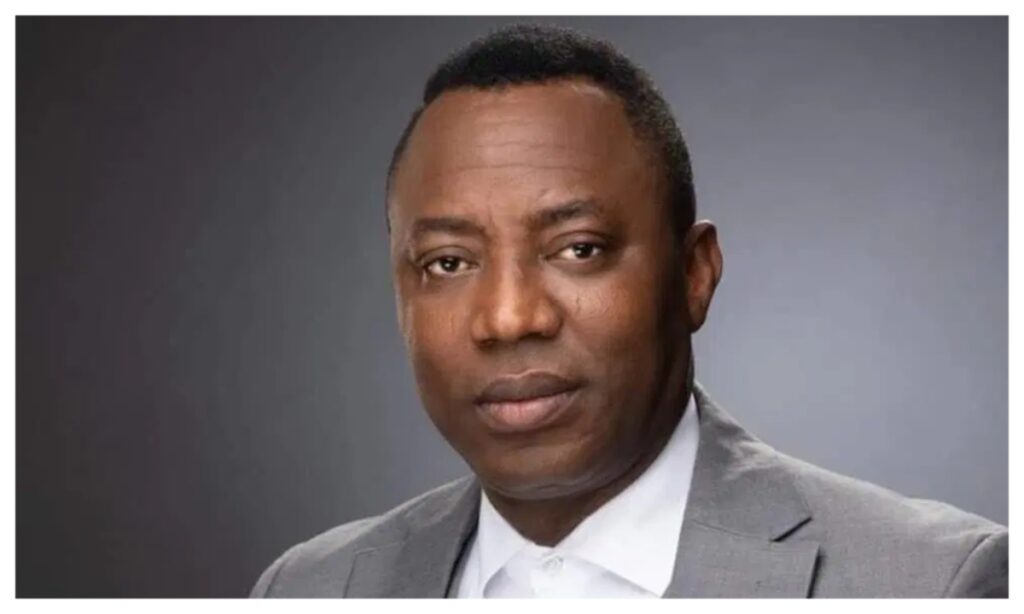
Former African Action Congress (AAC) presidential candidate Omoyele Sowore has warned that Nigerian security agencies are increasingly being used to police social‑media commentary, a trend he says threatens freedom of expression and democratic norms.
In a statement posted on his official X account, Sowore said that a growing number of Nigerian public figures appear more willing to involve law‑enforcement officials in disputes that arise from online banter, criticism or jokes. He argued that the “criminalising of speech, jokes, criticism, trolling and online banter” is “dangerous to democracy and fundamentally incompatible with freedom of expression.”
Sowore specifically singled out the Nigeria Police Force and parts of the justice system, accusing them of acting as “private enforcers for the rich, connected and powerful.” He claimed that influential individuals are now leveraging police powers to curb ordinary citizens’ online remarks, turning ordinary disagreements into matters of legal sanction.
The candidate’s remarks come amid wider concerns that Nigeria’s legal framework is being stretched to address what were previously considered matters of free speech. Recent court rulings and police actions against social‑media users have raised questions about the balance between curbing hate speech or defamation and preserving the right to critique public officials and personalities.
Legal experts note that while Nigeria does have statutes on cybercrime and defamation, their application has sometimes been perceived as selective, particularly when high‑profile personalities are involved. Human‑rights groups have called for clearer guidelines to prevent the misuse of these laws for personal vendettas or to silence dissent.
Sowore’s statements add to an ongoing debate about the role of state institutions in regulating digital discourse. Critics argue that over‑reliance on police intervention could create a chilling effect, discouraging legitimate commentary and stifling public debate. Proponents of stricter enforcement contend that online abuse, false information and targeted harassment require robust responses.
As the conversation unfolds, observers will watch how the Nigerian government and law‑enforcement agencies respond to these accusations. Any policy revisions or judicial rulings could shape the country’s digital public sphere and set precedents for how online speech is treated in the broader African context.