
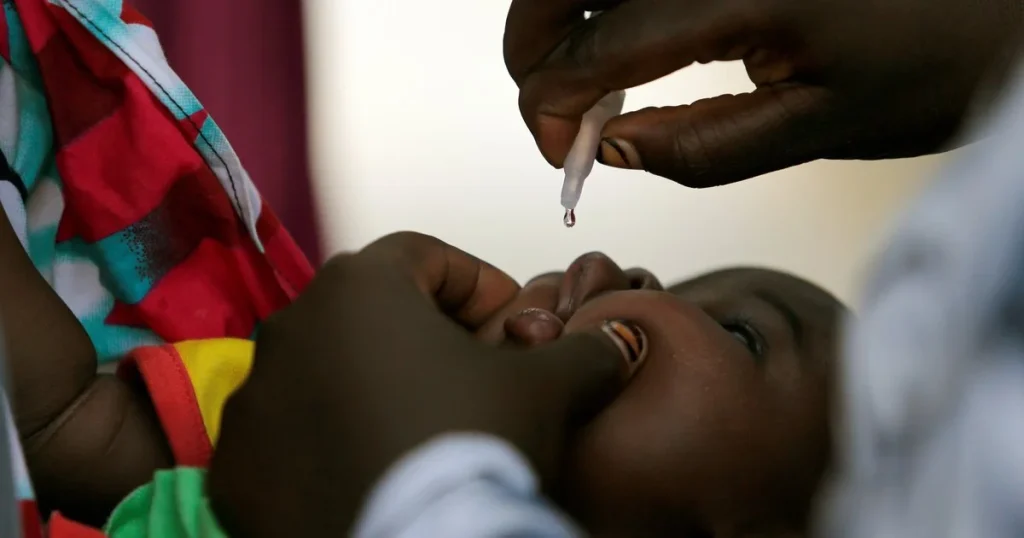
The Niger State Government has launched an eight-month initiative aimed at enhancing immunization coverage across ten local government areas (LGAs) that have been identified as having the highest numbers of zero-dose children. Zero-dose children are defined as those who have not received any routine vaccinations, particularly missing the first dose of the diphtheria, tetanus, and pertussis-containing vaccine (DTP1) during their first year of life. This initiative was announced during a Socialization Meeting regarding the partnership grant between the Republic of Korea and the United Nations Children’s Fund (UNICEF). The selected LGAs for this program include Bida, Chanchaga, Edati, Gurara, Katcha, Kontagora, Mariga, Rafi, Suleja, and Wushishi.
At the event, the Commissioner for Health, Dr. Murtala Bagana, represented by Permanent Secretary Dr. Abdullah Imam, attributed the challenges of low immunization rates largely to insecurity and the presence of hard-to-reach communities. He expressed gratitude to UNICEF and the Republic of Korea for their support and urged the benefiting LGAs to take ownership of the program to enhance immunization services at both the facility and community levels. “As a state, we are doing everything possible to ensure insecurity is curbed. We can all see its negative impact, and everybody is worried,” Dr. Bagana stated. He emphasized the importance of not only planning for zero-dose cases but also aiming to eliminate them entirely, noting that every unimmunized child poses a risk to themselves and others.
Dr. Inuwa Junaidu, the Executive Director of the Niger State Primary Health Care Development Agency, highlighted the significant challenges the state faces, including insecurity and banditry, due to its proximity to Zamfara, Kebbi, Kogi, and Kaduna States. A rapid assessment was conducted to identify the LGAs contributing most to the zero-dose burden. “With support from the Korean Government and UNICEF, we are working to ensure that all zero-dose children are identified and vaccinated within the eight-month period,” Dr. Junaidu remarked. The plan involves identifying, enumerating, and vaccinating eligible children to minimize the zero-dose burden in the state.
In a goodwill message, UNICEF Health Specialist from the Kaduna Field Office, Dr. Ahmed Tsofo, stressed the importance of strong collaboration with the state government for the program’s success. “UNICEF will stand shoulder to shoulder with you to ensure the success of this project,” he affirmed. Dr. Tsofo pointed out that Nigeria has the highest global burden of zero-dose children, estimated at 2.1 million, with states such as Adamawa, Bauchi, the Federal Capital Territory, Lagos, Niger, and Ogun being among the most affected. He added that coverage gaps have led to repeated outbreaks of vaccine-preventable diseases, including diphtheria, measles, and cholera, with insecurity remaining a significant barrier to reaching vulnerable children. The Niger State Government’s renewed focus on immunization highlights the urgent need to address health inequities and protect children from preventable diseases, especially in regions affected by insecurity and limited access to health services.

Comments are closed for this story.